
The Heavy Vehicle National Law Amendment Package passed in November 2025, with reforms due to commence in mid-2026. These aren’t minor tweaks to existing regulations.
Australia’s heavy vehicle industry faces its most significant regulatory shift in over a decade. Safety Management Systems will become mandatory for all operators seeking accreditation.
After twenty-five years working with operators across Australia’s supply chains, I’ve seen regulatory change create both opportunity and confusion. The difference between companies that thrive and those that struggle comes down to one thing: early preparation.

This comprehensive guide breaks down exactly what’s changing, when it takes effect, and how your business needs to respond. You’ll understand the new accreditation framework, SMS requirements, Chain of Responsibility enhancements, and the practical steps to ensure compliance before mid-2026.
By the end, you’ll have a clear roadmap for transitioning from the current NHVAS to the new General Safety Accreditation and Alternative Compliance Accreditation framework without operational disruption.
Overview of the Heavy Vehicle National Law 2026 Reform Package
The Heavy Vehicle National Law Amendment Bill 2025 represents the culmination of years of consultation between the National Transport Commission, NHVR, and industry stakeholders. It fundamentally restructures how safety obligations operate across the heavy vehicle supply chain.
Three core pillars define this reform. Safety Management Systems become the foundation of accreditation. A two-tiered accreditation framework replaces the current NHVAS structure. Chain of Responsibility obligations expand to capture more supply chain parties.
The NHVR released the 2026 Master Code in January 2026 as a practical guide for all Chain of Responsibility parties. This document provides the foundation for implementing SMS across your operations.
Unlike previous amendments that targeted specific compliance areas, these changes affect every party in the transport chain. Operators, consignors, loading managers, schedulers, and executives all face new obligations.
Why These Reforms Matter Now
The industry has operated under the existing HVNL framework since 2014. Compliance gaps became increasingly apparent as supply chains grew more complex and safety technology advanced.
The reform addresses three persistent problems. Inconsistent safety practices across accredited operators. Limited accountability for upstream supply chain decisions. Insufficient guidance on implementing effective safety systems.
These aren’t theoretical concerns. They’re issues I’ve helped hundreds of companies navigate through practical compliance implementation.
Key Stakeholders Affected
Heavy vehicle operators represent the most directly impacted group. Whether you run a single truck or manage a fleet of hundreds, SMS requirements apply from mid-2026.
Consignors who control goods movement will face strengthened CoR obligations. Loading managers need documented safety procedures. Schedulers must demonstrate how their decisions account for safety requirements.
Executives across the supply chain will carry new due diligence obligations. The reform specifically targets those who control or influence transport operations.
Timeline and Commencement Date for HVNL 2026 Changes
Understanding the timeline for implementation determines how quickly your business must act. The mid-2026 commencement date provides approximately four months from February 2026 for final preparations.
Queensland Parliament passed the Amendment Bill in November 2025. Other participating jurisdictions have aligned their legislative processes to ensure uniform commencement across the National Heavy Vehicle Law scheme.
The National Transport Commission completed consultation on statutory instruments throughout late 2025. These instruments provide the detailed requirements that underpin the new accreditation framework and SMS obligations.
Critical Implementation Milestones
Mid-2026 marks the official commencement date. From this point, new accreditation applications must demonstrate SMS conformance under the National Audit Standard.
Existing NHVAS participants receive transition provisions. You’ll have up to three years to migrate to either General Safety Accreditation or Alternative Compliance Accreditation.
The Master Code 2026 becomes the authoritative reference for all CoR parties. It replaces previous guidance documents and establishes clear expectations for safety management practices.
Between now and mid-2026, operators should focus on three priorities. Understand your SMS requirements. Identify gaps in current safety systems. Begin documenting processes that meet the National Audit Standard.
Transition Period Provisions
The three-year transition window provides breathing room but shouldn’t create complacency. Operators maintaining current accreditation can continue operating whilst implementing SMS requirements.
Early adoption offers strategic advantages. Auditors will have limited availability as all operators eventually seek conformance assessment. Scheduling conflicts will intensify as the transition deadline approaches.
Budget planning should account for audit costs, system documentation, and potential operational changes. Starting now spreads these costs across multiple financial years rather than creating a crunch in 2028-2029.
Mandatory Safety Management System Requirements
Safety Management Systems shift heavy vehicle compliance from reactive rule-following to proactive risk management. Instead of simply recording breaches after they occur, SMS requires identifying hazards before they cause harm.
Every accredited operator must implement six core SMS elements. Hazard identification processes that systematically uncover safety risks. Risk assessment frameworks that prioritise threats based on likelihood and consequence. Control measures that eliminate or minimise identified risks.
Monitoring systems track whether controls work as intended. Management review processes ensure continuous improvement. Documentation proves you’re actually doing what you claim.
Hazard Identification Processes
Hazard identification moves beyond obvious risks like mechanical failures. It requires examining how work scheduling affects fatigue. How loading practices influence stability. How communication breakdowns create safety gaps.
Effective identification involves everyone in your operation. Drivers know road-level hazards. Maintenance staff understand mechanical vulnerabilities. Schedulers see where time pressure creates risk.
Document each identified hazard in a central register. Include the task or activity involved, specific risk factors, and who might be harmed. Update this register regularly as operations change.
Risk Assessment and Control Implementation
Once hazards are identified, assess their risk level. Consider likelihood of occurrence and potential severity of consequences. A high-frequency, high-consequence risk demands immediate attention.
Apply the hierarchy of controls systematically. Eliminate risks where possible by changing processes. Substitute safer alternatives when elimination isn’t feasible. Implement engineering controls like technology solutions.
Administrative controls and personal protective equipment sit at the bottom of the hierarchy. They’re acceptable when higher-level controls aren’t practical, but they require more active management.
The NHVR emphasises Fatigue and Distraction Detection Technologies in managing fatigue and distraction hazards. These represent engineering controls that actively monitor driver state.
Monitoring and Continuous Improvement
SMS isn’t a set-and-forget document. It requires active monitoring to verify controls work as intended and identify emerging risks.
Establish key performance indicators for each control measure. Track compliance rates, incident frequency, near-miss reporting, and system audit findings. Review these metrics monthly at minimum.
Management review sessions should occur quarterly. Examine KPI trends, assess new hazards, evaluate control effectiveness, and adjust systems based on evidence. Document decisions and action items from each review.
Two-Tiered Accreditation Framework: GSA and ACA Explained
The new accreditation structure replaces NHVAS with two distinct pathways. General Safety Accreditation provides the baseline for operators implementing comprehensive SMS. Alternative Compliance Accreditation offers specialised arrangements for unique operational circumstances.
Both pathways require SMS conformance assessed against the National Audit Standard. The difference lies in how operators demonstrate compliance with specific HVNL obligations.
Understanding which pathway suits your operation determines your implementation strategy. Most operators will pursue GSA as the standard route to maintaining regulatory concessions and market access.
General Safety Accreditation Requirements
GSA becomes the primary accreditation pathway for operators seeking recognition of safety management capability. It covers mass management, maintenance, fatigue management, and load restraint modules.
Operators select which modules align with their operational needs. A metro delivery fleet might focus on mass management and maintenance. A long-haul operator adds fatigue management as a critical module.
The National Audit Standard sets conformance criteria for each module. Auditors assess whether your documented SMS addresses module-specific hazards, implements appropriate controls, and demonstrates effective monitoring.
Benefits of GSA include regulatory recognition across participating jurisdictions, access to certain mass and dimension concessions, and demonstration of due diligence for Chain of Responsibility purposes.
Alternative Compliance Accreditation Pathways
ACA provides flexibility for operations that don’t fit standard GSA frameworks. Specialised industries, emerging technologies, or unique operational models may qualify.
Examples include autonomous vehicle trials requiring non-standard safety frameworks. Specialised heavy haulage with unique engineering assessments. Operations using novel compliance approaches not captured in GSA modules.
Gaining ACA approval requires demonstrating equivalent or superior safety outcomes compared to standard requirements. You’ll work directly with NHVR to define appropriate performance criteria and monitoring arrangements.
ACA isn’t an easier path. It demands robust evidence that alternative approaches deliver safety outcomes whilst potentially offering operational flexibility unavailable through GSA.
Choosing Between GSA and ACA
Most operators default to GSA as the established pathway with clear requirements. If your operations align with standard heavy vehicle activities, GSA provides the straightforward route.
Consider ACA only when GSA genuinely doesn’t accommodate your operational reality. Pursuing ACA without strong justification creates unnecessary complexity and approval uncertainty.
Start by assessing current operations against GSA module requirements. Identify genuine gaps that standard frameworks can’t address. Only then explore whether ACA offers necessary flexibility.
Transitioning from NHVAS to the New Accreditation Framework
Current NHVAS participants face a structured transition to either GSA or ACA. The process requires careful planning to maintain accreditation continuity whilst building SMS capability.
Your existing accreditation remains valid during the transition period. You’re not immediately non-compliant on the mid-2026 commencement date. However, delaying transition planning creates unnecessary risk and resource pressure.
Operators under NHVAS will have up to three years to transition. This window allows systematic implementation rather than rushed compliance.
Assessing Current NHVAS Status
Begin by reviewing your existing NHVAS modules and how they map to GSA equivalents. Mass management, maintenance, and fatigue modules have direct correlations in the new framework.
Examine your current accreditation documentation. Do you already have hazard registers? Risk assessments? Monitoring processes? Many NHVAS operators have SMS foundations already in place.
Identify gaps between current practices and National Audit Standard requirements. This gap analysis reveals where you need to build capability before seeking conformance assessment.
Building SMS Capability During Transition
Use the transition period strategically to develop SMS maturity. Don’t wait until year three to begin implementation.
Start with hazard identification workshops involving operational staff. Their frontline experience identifies risks that desktop reviews miss. Document findings in a structured hazard register.
Develop risk assessment protocols that evaluate likelihood and consequence systematically. Train managers and supervisors to apply these protocols consistently across the operation.
Implement controls progressively, starting with highest-risk hazards. Document why you selected specific control measures and how you’ll monitor their effectiveness.
| Transition Phase | Key Activities | Timeframe |
|---|---|---|
| Assessment | Review current NHVAS status, conduct gap analysis, identify SMS requirements | Months 1-3 |
| Development | Build hazard registers, create risk assessment frameworks, document processes | Months 4-12 |
| Implementation | Roll out controls, train staff, establish monitoring systems | Months 13-24 |
| Conformance | Engage approved auditor, address findings, achieve certification | Months 25-36 |
Scheduling Conformance Assessment
Don’t leave conformance assessment until the final months of transition. Auditor availability will become constrained as thousands of operators seek assessment simultaneously.
Engage an approved auditor by late 2026 or early 2027 for preliminary assessment. This identifies gaps early whilst you still have time to address them systematically.
Schedule formal conformance assessment at least six months before your transition deadline. This buffer allows time to address non-conformances without risking accreditation lapse.
Enhanced Fatigue Management and Fitness-to-Drive Provisions
The HVNL 2026 reforms strengthen fatigue management beyond simple work and rest hour compliance. New unfit-to-drive provisions address immediate impairment risks that standard hours can’t capture.
These changes recognise that fatigue stems from multiple sources. Accumulated sleep debt, circadian rhythm disruption, health conditions, and medication effects all impair driving capability regardless of hours worked.
Operators must identify fatigue hazards specific to their operations. Long-haul routes crossing multiple time zones create different risks than metro multi-drop work. Your SMS must address your actual operational reality.
Unfit-to-Drive Requirements
The new unfit-to-drive provisions create positive obligations. Drivers must not operate when impaired. Operators must not require or permit impaired driving. Schedulers must not create schedules causing impairment.
Impairment extends beyond hours of work. Illness, medication, emotional distress, and substance use all trigger unfit-to-drive obligations. This creates grey areas requiring judgment rather than simple rule compliance.
Implement clear reporting processes for drivers to flag impairment concerns. Remove penalties for legitimate safety reporting. Provide alternative coverage when drivers can’t safely operate.
Document your unfit-to-drive decision framework. What signs trigger stand-down decisions? Who makes the call when driver and supervisor disagree? How do you verify fitness before return to work?
SMS Integration for Fatigue Hazards
Your SMS must systematically identify operation-specific fatigue hazards. Consider shift patterns, route characteristics, loading and unloading demands, and time zone transitions.
Night work creates inherent fatigue risk due to circadian rhythm disruption. Early morning starts reduce sleep opportunity. Variable schedules prevent consistent sleep patterns. Document these hazards in your register.
Apply control hierarchy to fatigue hazards. Can you eliminate overnight driving through operational changes? Substitute day shifts for night work? Implement technology like fatigue monitoring systems?
Administrative controls include maximum shift lengths beyond regulatory minimums, minimum break durations, scheduling rules that protect sleep opportunity, and fitness-for-duty assessments.
Technology as Fatigue Controls
Fatigue and Distraction Detection Technologies offer engineering controls that actively monitor driver state. Cameras track eye closure, head position, and attention indicators. Alerts notify drivers of impairment signs.
FDDT shouldn’t replace foundational controls like appropriate scheduling and adequate rest. They complement these primary controls by providing real-time monitoring and intervention capability.
When implementing FDDT, establish clear response protocols. What happens when the system alerts? Who gets notified? What actions does the driver take? How do you verify the response?
Chain of Responsibility and Executive Duty Enhancements
Chain of Responsibility obligations expand under the 2026 reforms to capture more supply chain participants. The primary duty framework clarifies exactly what each party must do to discharge safety obligations.
Executive officers face strengthened due diligence requirements. Board members, senior managers, and anyone exercising substantial influence over operations must demonstrate active engagement with safety systems.
These changes target the root cause of many compliance failures. When executives don’t understand or prioritise safety, systemic problems emerge despite frontline efforts.
Primary Duty Under Reformed CoR
The primary duty requires each party to ensure their conduct doesn’t cause or contribute to breaches. This applies to everyone in the supply chain with control or influence over transport operations.
Consignors who dictate delivery windows must ensure schedules allow legal compliance. Loading managers controlling loading processes must implement safe practices. Packing parties must secure loads appropriately.
The Master Code 2026 provides specific guidance for each party type. It translates broad legislative obligations into practical steps relevant to different supply chain roles.
Document how you discharge primary duty obligations. What processes ensure your actions don’t cause breaches? How do you verify contractors comply? What monitoring detects emerging risks?
Executive Officer Due Diligence
Executive officers must acquire and maintain knowledge of HVNL obligations relevant to their organisation. Ignorance provides no defence when breaches occur.
This knowledge requirement extends beyond reading legislation. Executives must understand how their business operates, what safety risks exist, and whether control systems work effectively.
Due diligence demands active engagement. Attend safety committee meetings. Review incident reports and investigation findings. Question whether resources allocated to safety match the organisation’s risk profile.
Ensure board papers include safety performance indicators. Track trends in compliance rates, near-miss reporting, and audit findings. Challenge management when metrics suggest system degradation.
Practical Due Diligence Documentation
Create an executive due diligence framework that demonstrates systematic engagement. Schedule quarterly safety briefings covering recent incidents, regulatory changes, and system performance.
Maintain records of executive safety training, site visits, and participation in risk reviews. These records prove active engagement if prosecutions allege due diligence failures.
Develop executive-level KPIs for safety performance. Board members should receive the same attention to safety metrics as financial performance. What gets measured gets managed.
Mass, Dimension, and Loading Regulation Updates
The 2026 reforms include technical changes to mass and dimension limits that affect vehicle utilisation and productivity. Mass and dimension changes raise General Mass Limits to current Concessional Mass Limits levels.

This change simplifies the framework by reducing the gap between general and concessional limits. Operators gain productivity benefits without requiring specific concessions for mass previously requiring special approval.
Loading regulation updates clarify obligations for all parties involved in load security. The reforms recognise that effective load restraint requires cooperation across multiple supply chain participants.
Updated General Mass Limits
Raising General Mass Limits reduces the regulatory burden for operators previously requiring concessional permits. Vehicles can now operate at higher masses under standard conditions without additional approvals.
This doesn’t eliminate mass management obligations. Operators must still verify actual masses, ensure vehicles operate within legal limits, and maintain documented mass management systems.
The change particularly benefits operators with variable loading where precise mass prediction proves difficult. Higher general limits provide buffer against inadvertent exceedances whilst maintaining safety margins.
Euro VI Concessions for Road Trains
Euro VI concessions extended to road trains under the reform package. This recognises the emissions benefits of newer engine technology across all heavy vehicle configurations.
Road trains meeting Euro VI standards gain access to certain mass concessions previously unavailable. This incentivises fleet upgrades to cleaner technology whilst supporting productivity.
Operators considering fleet replacement should factor these concessions into business case analysis. The productivity gains may justify accelerated replacement of pre-Euro VI units.
Load Restraint Obligations
Loading managers bear explicit obligations to ensure loads are secured according to the Load Restraint Guide. This clarifies responsibility when multiple parties participate in the loading process.
Packing parties who prepare goods for transport must pack in ways that facilitate proper restraint. Consignors providing loading instructions must ensure those instructions achieve effective restraint.
Document your load restraint processes regardless of your supply chain role. Drivers should verify restraint before departure. Loading managers should audit restraint practices. Consignors should specify restraint requirements in transport contracts.
Preparing Your Business for HVNL 2026 Compliance
Successful transition to the HVNL 2026 framework requires systematic preparation across multiple business functions. Start now to spread the work and cost over the available timeline.
The operators who struggle with these reforms will be those who delay action until the transition deadline approaches. Early adopters gain competitive advantages through demonstrated safety capability and smoother audit processes.
Your preparation roadmap should address system development, staff capability, documentation requirements, and conformance assessment scheduling. Each element requires dedicated resources and realistic timeframes.
SMS Development Priorities
Begin with hazard identification workshops involving operational staff at all levels. Drivers, mechanics, schedulers, and administrators all bring unique perspectives on operational risks.
Use structured facilitation to extract knowledge systematically. What tasks create safety risks? What conditions make incidents more likely? What near-misses have occurred but weren’t formally reported?
Document findings in a centralised hazard register. Include the activity involved, specific hazard, potential consequences, current controls, and residual risk rating. This register becomes your SMS foundation.
Develop risk assessment frameworks that evaluate likelihood and consequence consistently. Train supervisors and managers to apply these frameworks when operational changes introduce new hazards.
Staff Training and Capability Building
SMS requires different skills than traditional rule-based compliance. Staff must understand risk assessment, control hierarchy, and continuous improvement principles.
Develop training programmes tailored to different roles. Executives need due diligence training. Managers need risk assessment skills. Frontline staff need hazard identification and reporting capability.
Make training practical rather than theoretical. Use actual operational scenarios. Work through real hazards from your register. Practice applying control hierarchy to familiar risks.
Document training completion and competency assessment. Your SMS audit will verify that staff actually understand and can apply the systems you’ve documented.
Technology and System Investment
Effective SMS requires appropriate technology infrastructure. Hazard registers, incident tracking, corrective action management, and audit scheduling all benefit from dedicated platforms.
Spreadsheets work for small operations but become unwieldy as complexity grows. Purpose-built compliance management systems provide structure, automated workflows, and audit trails.
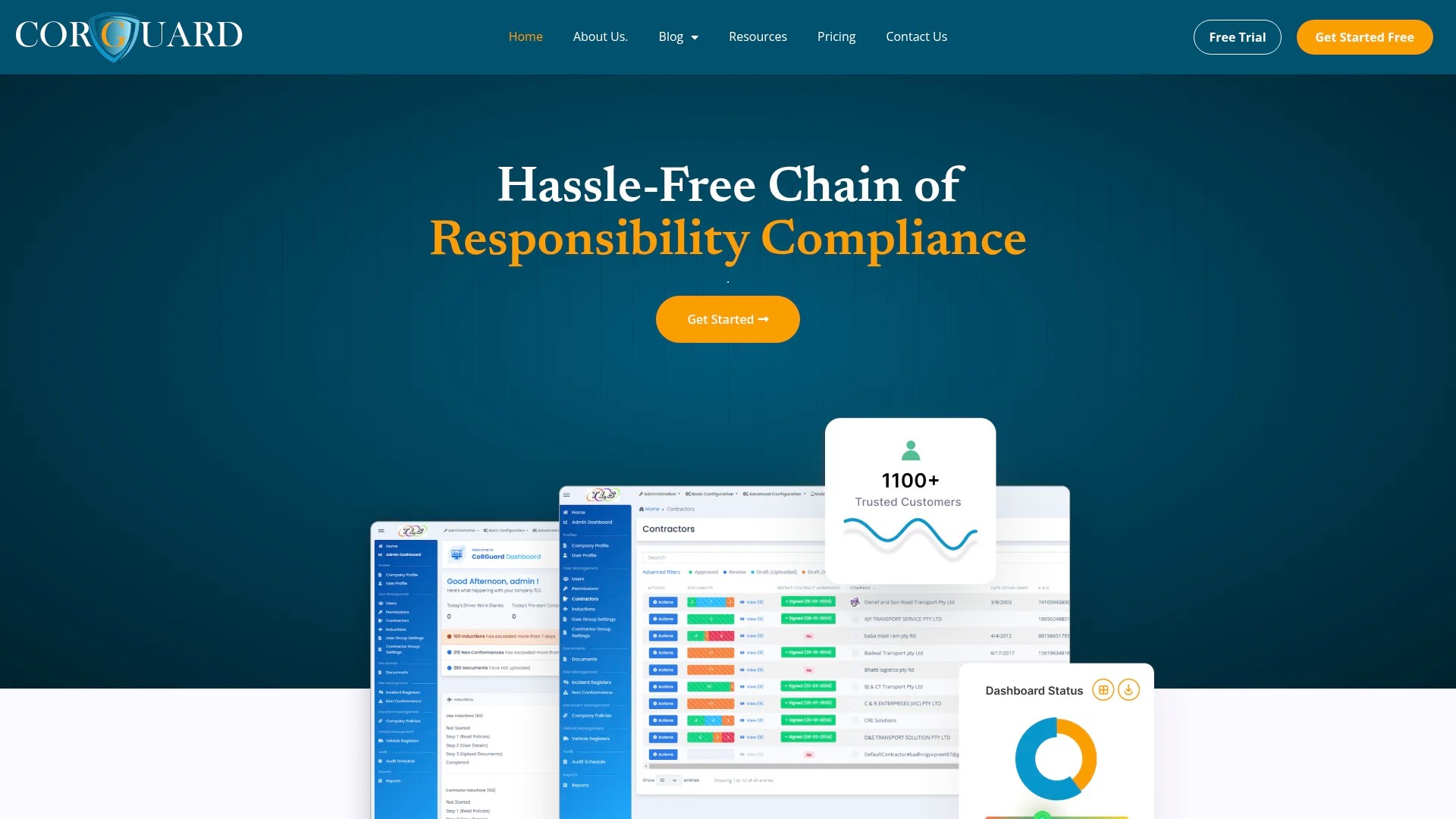
We developed CoRGuard specifically to address these SMS requirements. The platform manages hazard registers, automates monitoring, tracks corrective actions, and maintains audit evidence in one integrated system.
Whatever solution you choose, implement it early in your transition. Staff need time to adapt to new tools. Data quality improves with consistent use over time.
| Preparation Area | Key Actions | Resource Requirements |
|---|---|---|
| System Development | Conduct hazard identification, create risk frameworks, document processes | Internal facilitation or external consulting support |
| Staff Capability | Deliver role-based training, assess competency, build safety culture | Training development, delivery time, ongoing coaching |
| Technology Infrastructure | Implement compliance management platform, migrate historical data, configure workflows | Software licensing, implementation support, user training |
| Conformance Assessment | Engage approved auditor, conduct gap analysis, address findings, achieve certification | Audit fees, remediation time, potential operational adjustments |
Moving Forward with Confidence Under the New HVNL Framework
The HVNL 2026 reforms represent substantial change but also opportunity. Operators who embrace Safety Management Systems build genuine capability rather than just ticking compliance boxes.
Your immediate priorities are clear. Understand the SMS requirements for your operation. Assess gaps between current practices and National Audit Standard expectations. Begin systematic hazard identification and risk assessment.
Use the transition period strategically. Spread implementation across the available timeline. Engage auditors early for preliminary assessment. Schedule conformance certification well before deadlines.
The operators I’ve watched succeed through regulatory change share common characteristics. They start early, involve their entire team, document systematically, and view compliance as business improvement rather than burden.
Four months remain until mid-2026 commencement. The three-year transition window provides breathing room but shouldn’t create complacency. Begin your preparation now to ensure smooth transition when the new framework takes effect.
For more insights on managing Chain of Responsibility compliance under the evolving regulatory environment, visit our comprehensive resource library covering practical implementation strategies.