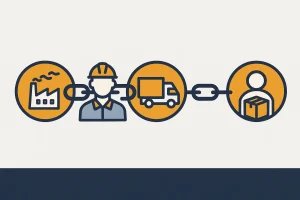
Transport safety risk assessment identifies hazards, evaluates their potential impact, and establishes control measures to prevent incidents. The process systematically examines vehicle condition, driver competence, route hazards, loading practices, and operational procedures to ensure compliance with regulatory requirements under frameworks like the Heavy Vehicle National Law. Effective assessment combines structured hazard identification, likelihood and consequence analysis, risk prioritization, and implementation of mitigation strategies across your entire transport operation.
Australian transport operators face a complex regulatory environment under Chain of Responsibility laws. These obligations extend beyond fleet managers to consignors, packers, loaders, and schedulers.
When conducted properly, risk assessment protects your drivers, reduces liability exposure, and demonstrates due diligence. This guide breaks down the methodology into practical steps you can implement immediately.
Understanding Transportation Safety Risk Assessment
Transportation safety risk assessment systematically identifies potential hazards in your operations and evaluates their severity. This process forms the foundation of any safety management system.
Risk assessment begins by determining which work areas require evaluation. You need to understand where hazards exist before you can control them.
Core Assessment Principles
The assessment process identifies hazards first, then evaluates their potential consequences. This sequence matters because you cannot assess risks from hazards you have not yet identified.
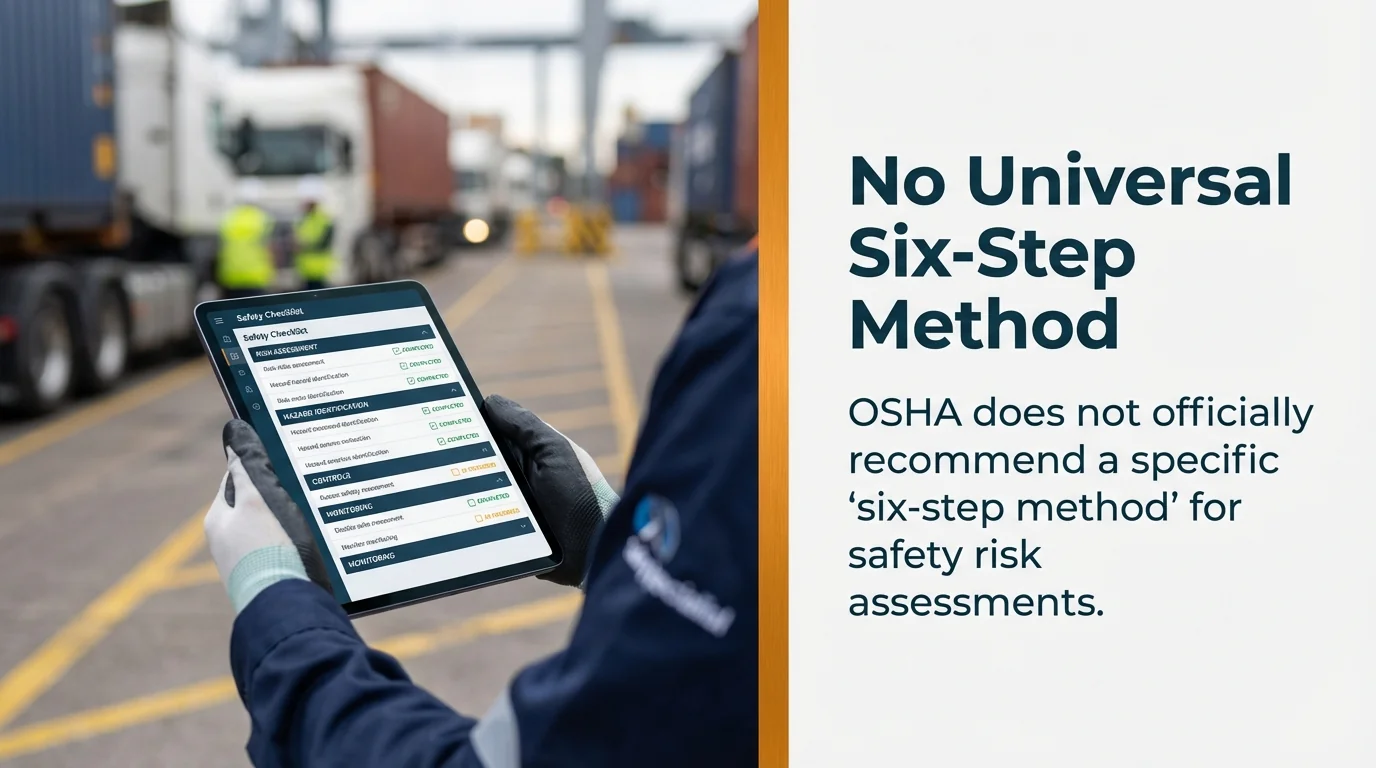
Many operators mistakenly believe in a standardized six-step method universally recommended by safety authorities. OSHA does not officially recommend a specific ‘six-step method’ for safety risk assessments. Instead, regulatory frameworks emphasize flexible approaches adapted to your specific operational context.
Your assessment methodology should reflect your operation’s unique characteristics. A metropolitan parcel delivery fleet faces different risks than a regional livestock transport operation.
Regulatory Framework Context
Australian transport operators must comply with the Heavy Vehicle National Law. This legislation establishes Chain of Responsibility obligations across the supply chain.
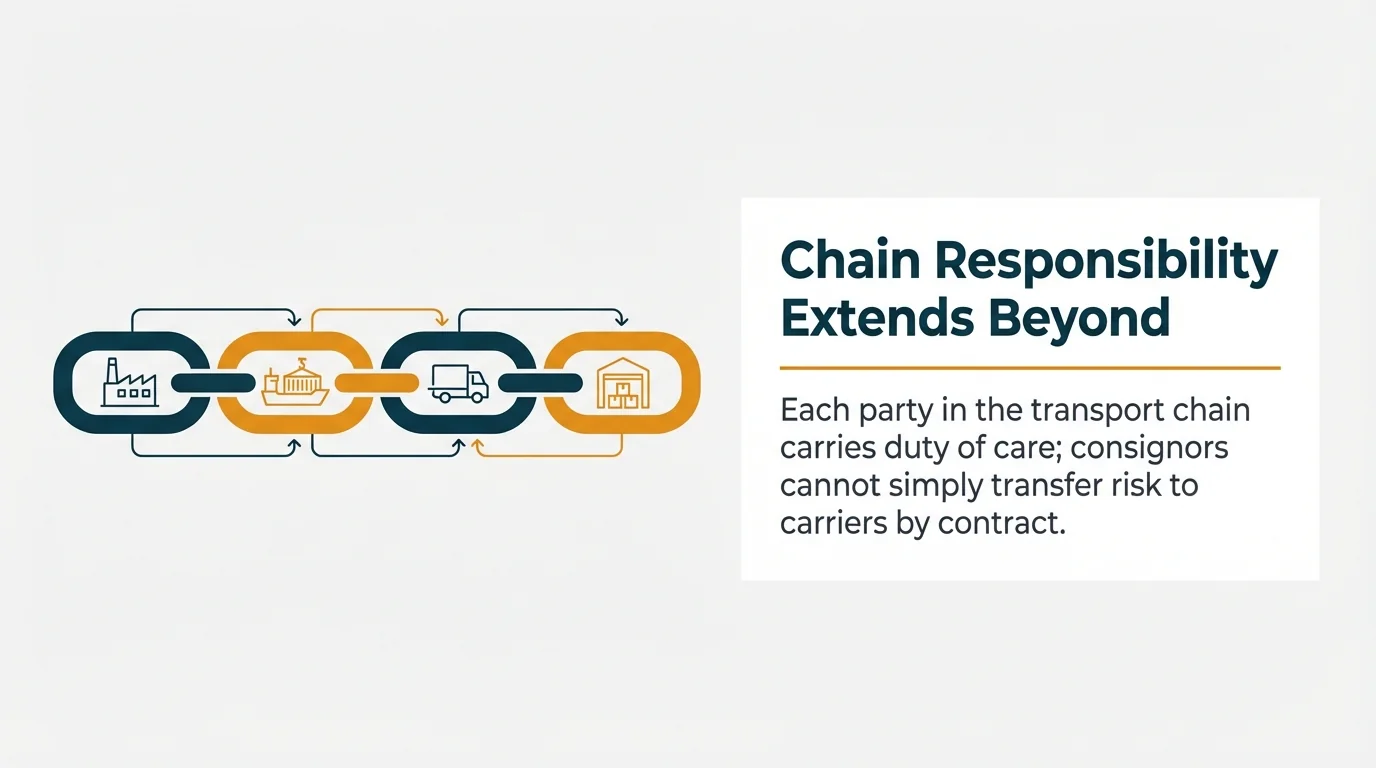
Each party in the transport chain carries duty of care. Consignors cannot simply transfer risk to carriers by contract.
Your risk assessment documentation demonstrates compliance with these legal obligations. Regulators expect systematic hazard identification and evidence of implemented controls.
The HVNL specifically requires parties to eliminate or minimize public safety risks. Your assessment process must address both internal safety and public risk exposure.
Why Assess Transport Safety Risks: Key Benefits
Transport risk assessment delivers tangible operational and financial benefits beyond regulatory compliance. Understanding these advantages helps justify the investment required.
Liability Protection and Cost Reduction
Comprehensive risk assessment reduces your exposure to liability claims. When incidents occur, documented assessment processes demonstrate due diligence.
Insurance premiums decrease when you present evidence of systematic risk management. Insurers reward operators who implement proactive safety measures.
Accident costs extend beyond immediate damage. Legal fees, regulatory penalties, and reputation damage compound direct expenses.
Preventive maintenance schedules identified through risk assessment catch mechanical failures before they cause incidents. This approach costs significantly less than reactive repairs.
Operational Stability and Performance
Risk assessment improves operational reliability. Fewer incidents mean fewer service disruptions and more consistent delivery performance.
Driver retention improves when workers see genuine commitment to their safety. Experienced drivers cost less to employ than constant recruitment and training.
You gain competitive advantage through demonstrated safety culture. Many large consignors now require safety audit evidence before awarding contracts.
Your understanding of chain of responsibility requirements positions you favorably in tender processes.
Core Components of Transportation Risk Assessment
Effective transportation risk assessment examines multiple interconnected operational elements. Each component contributes to overall safety performance.
Hazard Identification Across Operations
Hazard identification reviews past incident reports as a starting point. Patterns emerge when you analyze previous accidents and near misses.
You should categorize hazards by type: vehicle mechanical, driver behavior, route conditions, loading practices, and scheduling pressures. This categorization ensures comprehensive coverage.
Physical inspections reveal hazards that may not appear in reports. Walk through your depot, examine loading areas, and observe actual operations.
Consult with drivers directly. They encounter hazards that office-based managers never see.

Risk Evaluation Framework
Once hazards are identified, evaluate both likelihood and potential consequences. This evaluation determines priority for mitigation efforts.
Likelihood considers frequency of exposure and existing control effectiveness. Some hazards present constantly while others appear only in specific circumstances.
Consequence severity ranges from minor injury or damage to multiple fatalities. Financial impact, regulatory penalties, and reputation damage factor into severity assessment.
| Risk Level | Likelihood | Consequence | Action Required |
|---|---|---|---|
| Critical | High | Severe | Immediate action required, stop operations |
| High | Medium to High | Major | Implement controls within 48 hours |
| Medium | Medium | Moderate | Scheduled mitigation within two weeks |
| Low | Low | Minor | Monitor and review quarterly |
Risk matrices provide visual representation of your assessment. Plotting hazards by likelihood and consequence clarifies priorities.
Documentation and Compliance Records
Your risk assessment must be documented to demonstrate regulatory compliance. Documentation also enables continuous improvement through trend analysis.
Record each identified hazard with its assessment details. Include control measures implemented and responsible parties.
Maintain records of when assessments were conducted and reviewed. Regular review schedules ensure assessments remain current as operations change.
Digital documentation systems enable better tracking and reporting. Paper-based systems struggle with version control and accessibility.
Step-by-Step Risk Assessment Methodology
Now that you understand the components, implement this structured approach. Each step builds on the previous one.
Step One: Define Assessment Scope
Determine which operational areas require assessment. Fleet size, operation type, and regulatory requirements influence scope decisions.
Bus transit operations require different assessment focus than freight logistics. Passenger transport emphasizes different hazards than bulk materials hauling.
Document your scope definition clearly. This prevents gaps where hazards fall between assessment areas.
Step Two: Assemble Assessment Team
Include diverse perspectives in your assessment team. Operations managers, mechanics, experienced drivers, and safety officers each contribute unique insights.
External consultants bring specialized expertise but must be paired with operational staff. Internal knowledge of actual practices proves essential.
Assign clear roles and responsibilities. One person should coordinate the process while others contribute specific operational knowledge.
Step Three: Systematic Hazard Identification
Review historical incident data first. Analyze patterns across time periods and operational categories.
Conduct workplace inspections of vehicles, facilities, and loading areas. Use standardized checklists to ensure consistency.
Interview drivers and other operational staff. Their daily experience reveals hazards that managers overlook.
Consider external factors like road conditions, weather impacts, and traffic patterns. Route-specific hazards require geographic analysis.
Step Four: Evaluate and Prioritize Risks
Apply your risk evaluation framework to each identified hazard. Assess both likelihood and consequence systematically.
Use consistent criteria across all hazards. Subjective judgments create inconsistent prioritization.
Plot results on your risk matrix. Visual representation helps communicate priorities to stakeholders.
Focus initial mitigation efforts on critical and high-risk items. Medium and low risks can follow scheduled timelines.
Step Five: Develop Control Measures
Apply the hierarchy of controls: elimination, substitution, engineering controls, administrative controls, then personal protective equipment. More effective controls appear higher in this hierarchy.
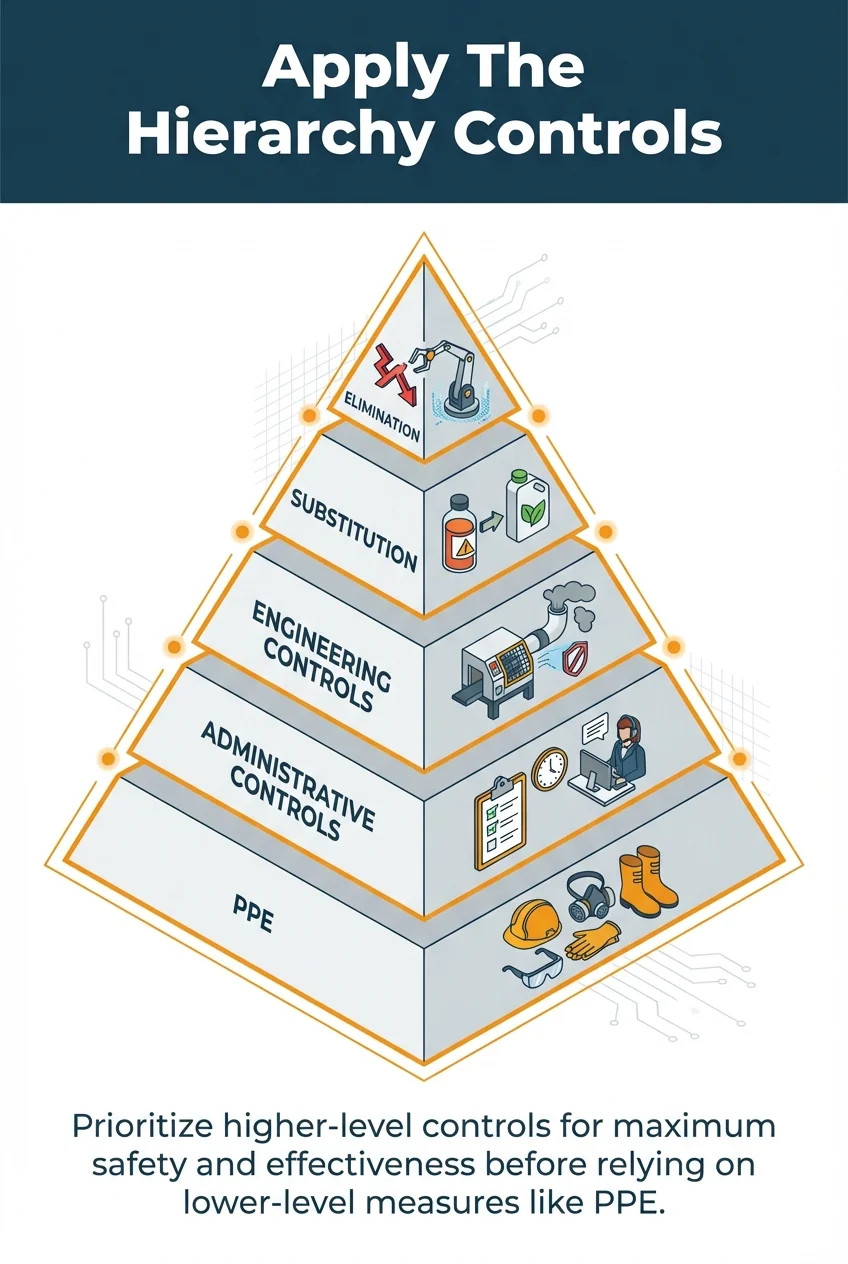
Elimination removes the hazard entirely. Can you eliminate night driving on hazardous routes?
Engineering controls modify equipment or environment. Installing electronic stability control systems exemplifies this approach.
Administrative controls change work procedures. Driver fatigue management policies fall into this category.
Document each control measure with implementation responsibility and timeline. Vague commitments do not reduce risk.
Step Six: Implement and Monitor
Execute your control measures according to priority. Track implementation progress against timelines.
Monitor control effectiveness after implementation. Some measures work as planned while others require adjustment.
Establish review schedules for ongoing assessment. Operations change, introducing new hazards and modifying existing risks.
Annual comprehensive reviews should occur at minimum. Trigger additional reviews after significant incidents or operational changes.
Vehicle and Equipment Risk Evaluation
Vehicle condition directly impacts transportation safety risks. Mechanical failures cause preventable incidents and regulatory breaches.
Pre-Operation Inspection Requirements
Daily pre-operation inspections identify defects before vehicles enter service. Drivers must be trained to recognize critical safety issues.
Your inspection checklist should cover brakes, steering, lights, tires, load restraints, and other safety-critical systems. Standardized forms ensure consistency.
Defect reporting procedures must be clear. Drivers need simple methods to report issues and understand when vehicles should not operate.
Maintenance responses to identified defects require tracking. Some defects need immediate rectification while others can follow scheduled maintenance.
Preventive Maintenance Schedules
Preventive maintenance programs reduce mechanical failure risks. Scheduled servicing catches deteriorating components before failure.
Base maintenance intervals on manufacturer recommendations and operational intensity. High-utilization vehicles need more frequent attention.
Track maintenance history for each vehicle. Patterns of recurring issues indicate underlying problems requiring systematic resolution.
Document all maintenance activities with dates, work performed, and parts replaced. This documentation proves compliance and enables trend analysis.
Equipment Standards and Modifications
Ensure all vehicles meet relevant Australian Design Rules and regulatory requirements. Non-compliant modifications create significant liability exposure.
Safety technology additions like electronic stability control, collision warning systems, and lane departure alerts reduce incident risk. Evaluate cost-benefit for your fleet.
Load restraint equipment must comply with Load Restraint Guide standards. Inadequate restraints create risks for both drivers and other road users.
Driver and Human Factors Assessment
Driver competence and behavior significantly influence transportation safety risks. Even well-maintained vehicles operated by fatigued or inadequately trained drivers pose serious hazards.
Driver Qualification and Licensing
Verify that all drivers hold appropriate licenses for the vehicles they operate. License class mismatches create regulatory breaches and invalidate insurance.
Medical fitness assessments ensure drivers meet health standards. Age-appropriate and condition-appropriate medical reviews catch issues affecting safe operation.
Qualification files should document license verification, medical certificates, training completion, and assessment records. Maintain these files current and accessible for audit.
Training and Competency Development
Induction training for new drivers must cover your specific operational hazards. Generic training does not address unique risks in your operation.
Ongoing training addresses emerging risks and refreshes critical skills. Fatigue management, load restraint, and Chain of Responsibility obligations require regular reinforcement.
Competency assessments verify that training translates into practice. Observation-based assessments reveal gaps between knowledge and application.
Document all training activities with dates, content covered, and assessment outcomes. This documentation proves due diligence and identifies skill gaps.
Fatigue Management Systems
Driver fatigue represents one of the most significant transportation safety risks. Work and rest hour requirements under HVNL must be strictly enforced.
Scheduling practices should prevent excessive hours. Unrealistic delivery timeframes create pressure that encourages non-compliance.
Fatigue management plans must consider individual driver circumstances. Drivers with sleep disorders or other health issues need additional monitoring.
Technology solutions like electronic work diaries improve compliance monitoring. Manual record-keeping systems prove less reliable and harder to audit.
Behavior Monitoring and Intervention
Telematics systems track driver behavior including speeding, harsh braking, and rapid acceleration. This data identifies high-risk behaviors requiring intervention.
Dashcam footage provides objective evidence of incidents and near-misses. Review footage systematically rather than only after incidents.
Coaching programs address identified behavior issues more effectively than punitive approaches. Drivers respond better to constructive feedback with clear expectations.
Incident trends by driver reveal individuals needing additional support. Some drivers consistently perform safely while others show concerning patterns.
Route and Operational Risk Analysis
Route characteristics significantly influence transportation safety risks. Road conditions, traffic patterns, and environmental factors all impact hazard exposure.
Geographic and Environmental Hazards
Identify high-risk route sections including steep grades, sharp curves, narrow roads, and areas with poor sight lines. Map these locations systematically.
Weather impacts vary geographically. Flood-prone areas, fog zones, and regions prone to ice require specific control measures.
Wildlife strike risks concentrate in specific locations and times. Kangaroo activity patterns affect route safety assessments in regional areas.
Traffic congestion points increase crash risk through stop-start driving and frustrated driver behavior. Consider alternative routes or timing.
Route Planning and Optimization
Route selection should balance efficiency with safety considerations. The fastest route may not present the lowest risk.
Time-of-day factors affect route risk. Night driving on unfamiliar rural roads increases hazard exposure.
Rest stop locations need planning into routes. Drivers cannot manage fatigue without accessible, safe stopping points.
Bridge weight limits, height restrictions, and load-specific route requirements require systematic verification. Unauthorized route deviations create compliance breaches.
Loading and Cargo Security Assessment
Load security failures cause serious incidents. Shifting loads affect vehicle stability while load loss endangers other road users.
Loading procedures must follow Load Restraint Guide principles. Different cargo types require specific restraint approaches.
Load distribution affects vehicle handling characteristics. Improperly distributed weight creates rollover risks and brake imbalance.
Chain of Responsibility obligations extend to consignors and loaders. Your assessment must address practices at loading sites you do not directly control.
Technology Solutions for Transport Risk Management
Technology enables more sophisticated and systematic risk management. Modern solutions provide capabilities impossible with manual approaches.
Telematics and Fleet Monitoring Systems
GPS tracking systems monitor vehicle location and movement patterns. This data supports route compliance verification and incident investigation.
Driver behavior monitoring through telematics identifies high-risk practices. Real-time alerts enable intervention before incidents occur.
Maintenance scheduling systems track service intervals and defect management. Automated reminders prevent overdue maintenance.
Fuel consumption monitoring reveals operational inefficiencies. Excessive fuel use often correlates with poor driving practices.
Safety Management Platforms
Integrated safety management systems centralize risk assessment documentation. Cloud-based platforms provide accessible record-keeping with version control.
Automated compliance monitoring tracks regulatory requirements across your fleet. Alert systems notify responsible parties of upcoming deadlines.
Incident reporting workflows streamline investigation processes. Structured forms ensure consistent data capture for trend analysis.
Audit management tools schedule and document safety audits. Corrective action tracking closes the loop on identified issues.
Purpose-built compliance platforms like CoRGuard consolidate these capabilities. End-to-end systems reduce administrative burden while improving compliance outcomes.
Predictive Analytics and Trend Analysis
Historical data analysis identifies emerging risk patterns. Predictive models forecast where incidents are likely to occur.
Driver scoring algorithms compare individual performance against fleet benchmarks. This comparison identifies both high-performing and high-risk drivers.
Maintenance failure prediction uses component life data to anticipate mechanical issues. Replace parts based on condition prediction rather than fixed intervals.
Route risk scoring combines multiple data sources to evaluate hazard exposure. Optimize route selection using comprehensive risk profiles.
Implementation Considerations
Technology implementation requires appropriate change management. Drivers and operational staff need training and support to adopt new systems.
Integration with existing systems matters for efficiency. Disconnected tools create duplicate data entry and reconciliation issues.
Data privacy and security require attention. Driver monitoring data carries privacy obligations under Australian Privacy Principles.
Start with core functionality before adding complexity. Successful implementations build capabilities progressively rather than attempting everything simultaneously.
Continuous Improvement and Safety Culture
Risk assessment is not a one-time project. Continuous improvement processes embed safety into your operational culture.
Regular review cycles keep assessments current as your operations evolve. Schedule comprehensive reviews annually at minimum, with trigger reviews after significant incidents or changes.
Safety performance indicators track your progress. Lead indicators like near-miss reporting rates prove more valuable than lag indicators like incident counts.
Management commitment demonstrates through resource allocation. Safety improvements require budget support, not just policy statements.
Worker consultation brings operational insight into your assessment processes. Drivers and other operational staff see hazards that managers miss.
Your risk assessment process demonstrates Chain of Responsibility compliance while protecting your operations from preventable incidents. Systematic hazard identification, evaluation, and control measures reduce both safety risks and business risks.
Start with your highest-priority operational areas. Implement the methodology progressively across your fleet rather than attempting comprehensive assessment simultaneously.
Technology solutions streamline the process but structured methodology remains essential. Tools support good practice but cannot replace systematic thinking about your specific operational hazards.