Contractor compliance isn’t optional anymore. It’s the difference between a protected business and a liability nightmare waiting to happen.
After 25 years in supply chain and logistics, I’ve seen businesses face catastrophic penalties from contractor misclassification alone. The regulatory landscape has tightened dramatically, particularly under the Heavy Vehicle National Law framework I’ve worked with extensively.
This checklist covers the essential documentation requirements, insurance verification protocols, safety compliance measures, and legal obligations you must have in place. We’ll walk through contractor qualification processes, credential verification systems, and the tracking mechanisms that prevent compliance gaps.
By the end, you’ll have a practical framework for managing contractor relationships that protects your business from misclassification risks and regulatory penalties.
What Is a Contractor Compliance Checklist?
A contractor compliance checklist is your systematic documentation of every legal requirement, safety protocol, and verification step needed before engaging independent contractors.
Think of it as your compliance audit trail. Every box you tick represents a potential lawsuit or penalty you’ve avoided.
The checklist typically includes contractor classification verification, insurance certificate collection, credential validation, safety training documentation, and tax obligation tracking. Each category protects you from different liability exposures.
Most businesses treat contractor compliance as administrative busywork. That’s a dangerous mistake.
Proper contractor management systems turn compliance requirements into standardized workflows. You’re not just checking boxes; you’re building defensible records that demonstrate due diligence if disputes arise.
Why Contractor Compliance Is Critical for Your Business
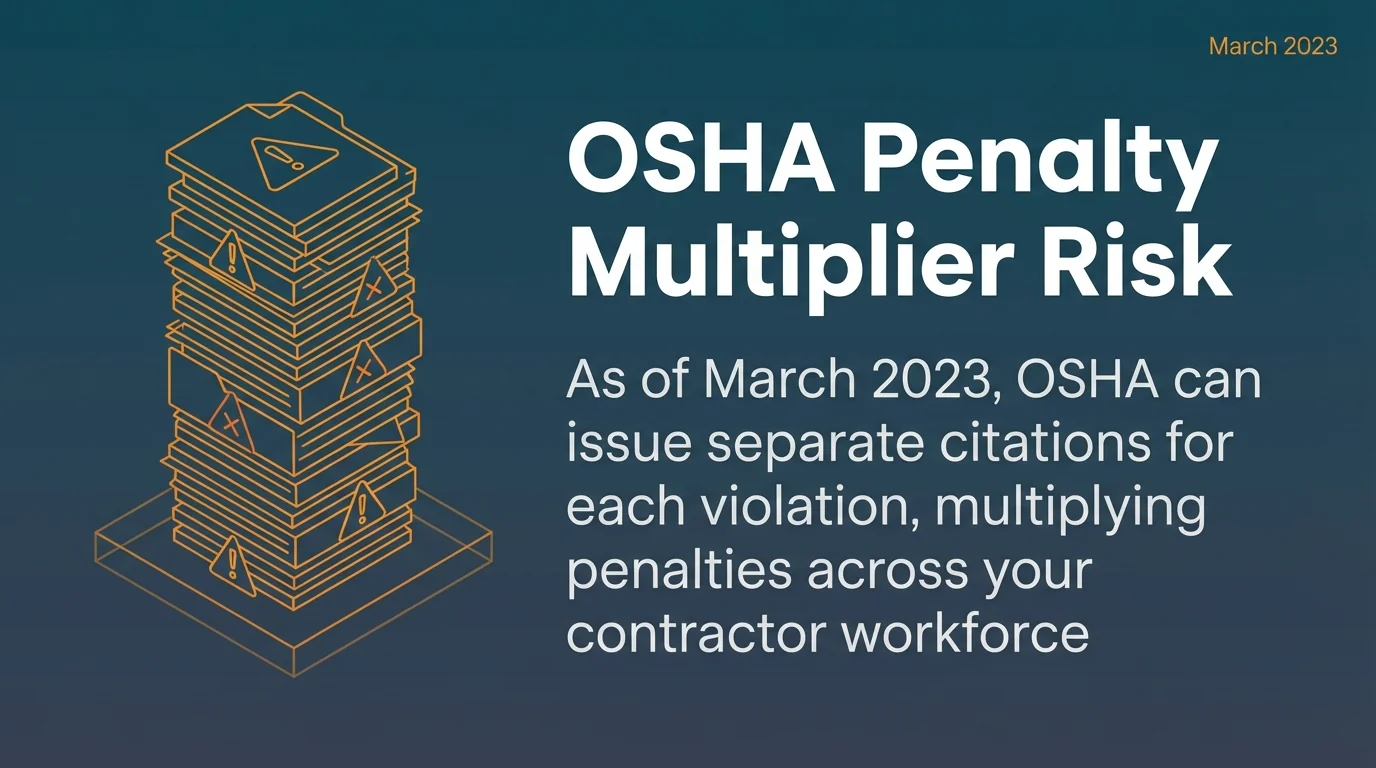
The financial consequences of non-compliance have escalated significantly. As of March 2023, OSHA can issue separate citations for each violation, multiplying penalties across your contractor workforce.
Contractor misclassification represents one of the highest-risk compliance failures. Courts scrutinize the independent contractor versus employee distinction closely, examining control, financial arrangements, and relationship permanence.
Get this wrong, and you’re liable for back taxes, benefits, workers’ compensation, and penalties. The costs compound quickly.
Beyond financial penalties, compliance failures damage your market reputation. Third-party due diligence audits from potential clients often disqualify businesses with poor contractor management records.
Insurance coverage becomes problematic too. Insurers deny claims when they discover undocumented contractors or misclassification issues.
The compliance requirements themselves aren’t particularly complex. The challenge lies in consistent execution across every contractor engagement.
Essential Documentation Requirements
Documentation forms the foundation of your contractor compliance program. Without proper records, you can’t demonstrate compliance during audits or disputes.
Core Contract Documents
Every contractor engagement requires a written independent contractor agreement. This document establishes the legal relationship and defines scope, deliverables, payment terms, and termination conditions.
The agreement must clearly articulate the independent nature of the relationship. Include provisions about the contractor’s autonomy, their responsibility for their own taxes, and their separate business entity status.
Avoid language that suggests employee-like control. Don’t specify work hours, require attendance at company meetings, or mandate use of company equipment unless absolutely necessary.
Tax and Financial Documentation
Collect a completed W-9 form from every contractor before their first payment. This captures their taxpayer identification number and legal business name for your 1099 reporting obligations.
Your tax obligations extend beyond just collecting forms. You must issue 1099-NEC forms to contractors who receive $600 or more annually.
Track contractor payments separately from employee payroll. This documentation distinction reinforces the independent contractor classification.
Record Retention Standards
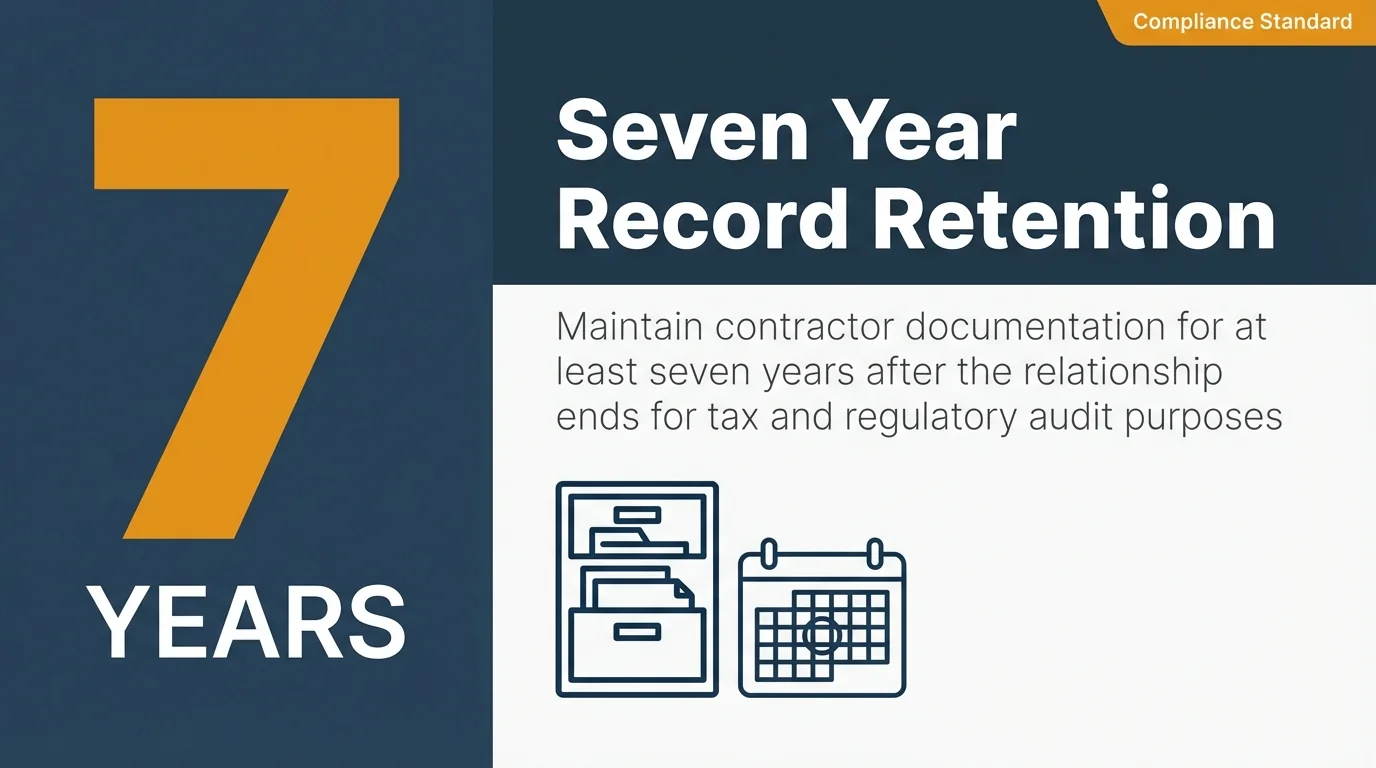
Maintain contractor documentation for at least seven years after the relationship ends. Tax authorities and regulatory bodies can audit historical relationships.
Store records systematically, not scattered across email, file cabinets, and shared drives. Contractor management software centralizes this documentation and automates renewal tracking.
Insurance and Liability Verification
Certificate of Insurance collection represents your primary defense against contractor-related liability claims. Never allow contractors to begin work without verified insurance coverage.
Required Insurance Types
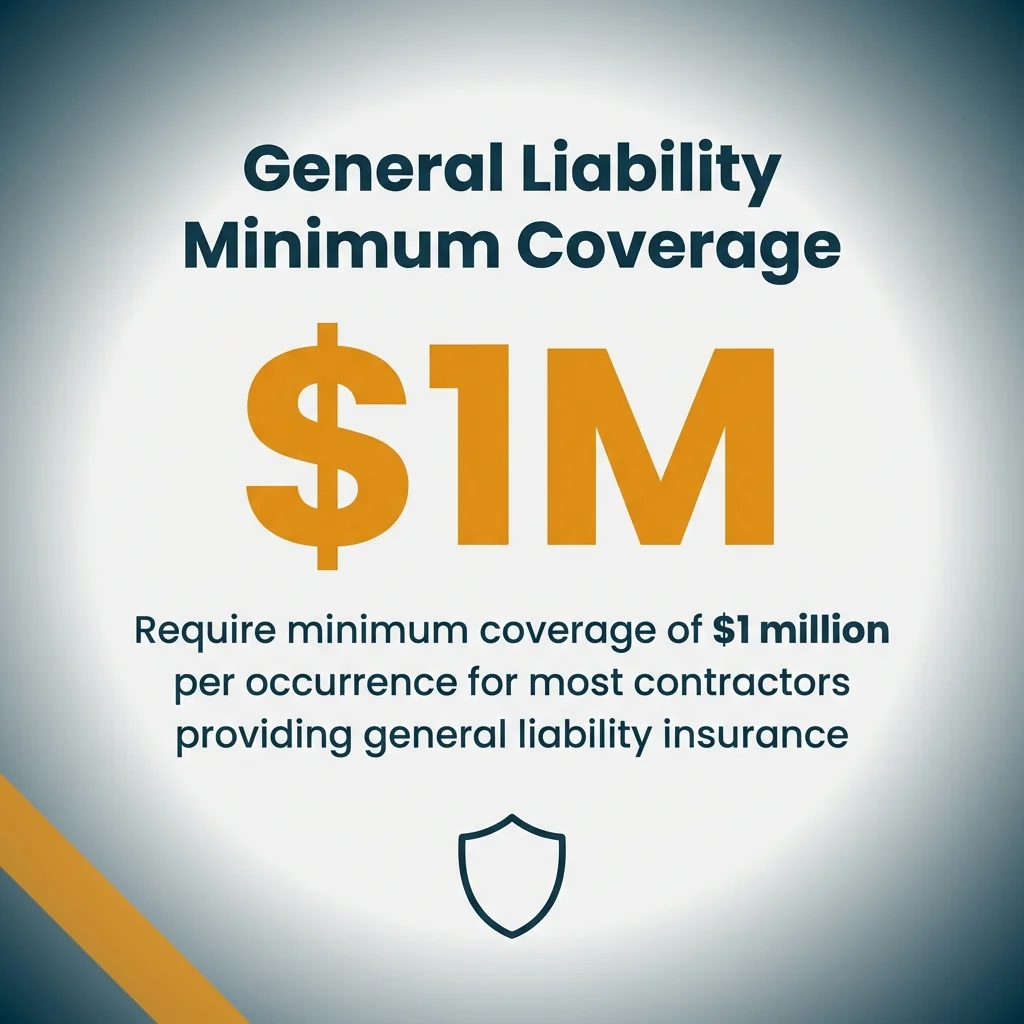
General liability insurance protects against property damage and bodily injury claims. Require minimum coverage of $1 million per occurrence for most contractors.
Professional liability coverage applies to contractors providing specialized services. This covers errors, omissions, and negligence in their professional work.
Workers’ compensation insurance becomes critical when contractors employ their own workers. Verify they carry adequate coverage to protect their employees.
Certificate of Insurance Verification Process
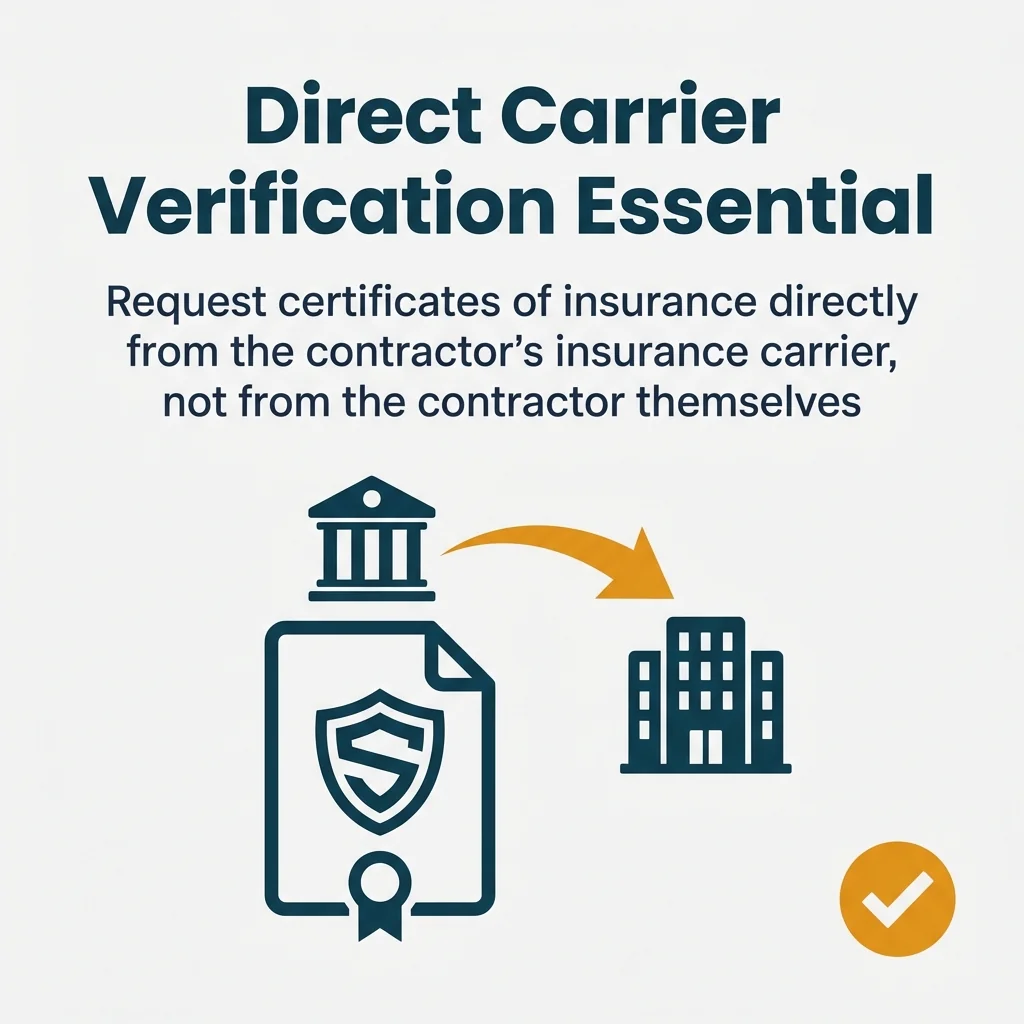
Request certificates of insurance directly from the contractor’s insurance carrier, not from the contractor themselves. This prevents fraudulent documentation.
Verify that your company is listed as an additional insured on the contractor’s policy. This provides direct protection for your business.
Check coverage dates carefully. Expired insurance coverage creates immediate liability exposure.
Set up automated alerts 30 days before insurance expiration dates. This gives contractors time to renew and submit updated documentation.
Ongoing Insurance Monitoring
Insurance coverage verification isn’t a one-time onboarding task. Contractors can cancel policies or let coverage lapse during your engagement.
Implement quarterly insurance verification for long-term contractors. Request updated certificates of insurance at regular intervals.
Track certificate renewal dates in your contractor management system. Automated tracking prevents coverage gaps that expose you to risk.
Contractor Qualification and Credentialing
Your qualification process determines which contractors are competent and legally authorized to perform the work you’re contracting.
License and Credential Verification
Verify that contractors hold current licenses for regulated work. Check credentials directly with issuing authorities, not just by examining contractor-provided documents.
Different states and jurisdictions have varying licensing requirements. Don’t assume a contractor licensed in one location can legally work in another.
Professional certifications require similar verification. Contact certifying bodies to confirm current status and any restrictions or disciplinary actions.
Prequalification Screening
Establish minimum qualification standards before contractors enter your approved vendor list. This includes financial stability checks, reference verification, and safety record reviews.
Request proof of business registration and good standing status. Independent contractors should operate as legitimate business entities.
Review the contractor’s safety history. Request their OSHA 300 logs if applicable to identify patterns of workplace incidents.
Skills and Experience Assessment
Document the specific skills and experience that qualify each contractor for their assigned work. This creates an audit trail demonstrating you engaged appropriately qualified individuals.
Maintain updated contractor profiles that track credentials, certifications, insurance status, and performance history. This information supports future assignment decisions.
Safety and Training Compliance
Safety compliance extends to contractor workforces, not just your direct employees. You maintain responsibility for site safety regardless of employment classification.
Mandatory Safety Training
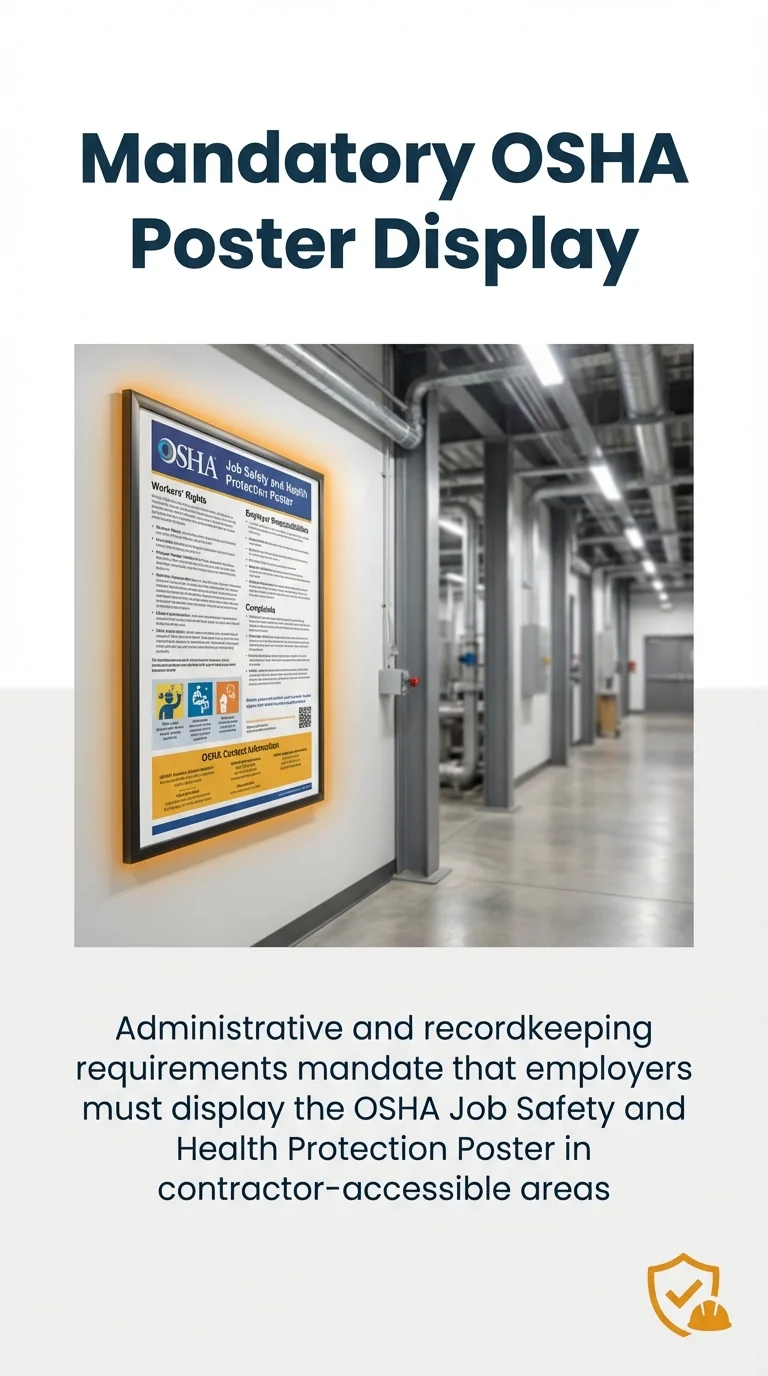
Administrative and recordkeeping requirements mandate that employers must display the OSHA Job Safety and Health Protection Poster in areas accessible to contractors.
Provide site-specific safety orientation to all contractors before work begins. Cover hazard communication, emergency procedures, and site-specific risks.
Document that contractors received and acknowledged safety training. Signed acknowledgments demonstrate your due diligence in safety compliance.
Site Safety Policies
Establish clear safety policies that apply to contractors working at your facilities. These policies should address personal protective equipment requirements, hazard reporting procedures, and incident investigation protocols.
Don’t assume contractors understand your safety expectations. Explicitly communicate requirements and verify understanding before work authorization.
Incident Reporting and Investigation
Require contractors to report all safety incidents immediately, regardless of severity. Delayed reporting complicates investigations and may indicate attempts to conceal incidents.
Investigate contractor incidents using the same rigor applied to employee incidents. Your liability exposure is similar regardless of employment classification.
Track contractor safety performance metrics. Pattern analysis identifies high-risk contractors who require additional oversight or removal from your approved vendor list.
Tax and Legal Compliance Requirements
Tax compliance failures trigger IRS scrutiny and potential reclassification of your entire contractor workforce. The stakes are significant.
Independent Contractor Classification
The IRS applies a multi-factor test examining behavioral control, financial control, and relationship type. No single factor determines classification; courts evaluate the totality of circumstances.
Behavioral control considers who directs how work is performed. Independent contractors should control their own methods and processes.
Financial control examines who bears business risk. Independent contractors invest in their own equipment, incur expenses, and can profit or lose money.
The relationship type looks at written contracts, benefits provision, and relationship permanence. True independent contractors engage in discrete projects, not ongoing indefinite relationships.
Misclassification Risks and Consequences
Misclassification triggers liability for employment taxes, unemployment insurance, workers’ compensation premiums, and employee benefits. Penalties compound these costs substantially.
State and federal agencies increasingly coordinate enforcement efforts. A single audit can cascade across multiple regulatory bodies.
The legal requirements for proper classification continue evolving. Stay current with regulatory guidance and court decisions affecting contractor classification.
Audit Preparation and Record-Keeping
Maintain comprehensive records demonstrating the independent nature of contractor relationships. Documentation should show contractors work for multiple clients, set their own schedules, and operate as separate businesses.
Conduct periodic self-audits of your contractor classification practices. Identify potential misclassification issues before regulators do.
Consider engaging legal counsel for classification reviews when engaging large contractor workforces or in borderline situations.
Implementing Your Contractor Compliance Checklist
A checklist only provides value when integrated into your actual contractor management workflows. Implementation determines success.
Standardize Your Onboarding Process
Create a mandatory onboarding sequence that every contractor must complete before work authorization. This standardization prevents gaps and ensures consistency.
Your onboarding checklist should include documentation collection, insurance verification, credential checks, safety training, and system access provisioning.
Assign clear ownership for each checklist item. Ambiguous responsibility leads to incomplete onboarding.
Leverage Contractor Management Software
Manual tracking of contractor compliance requirements creates gaps and failures. Spreadsheets don’t scale effectively.
Contractor management software automates document collection, tracks expiration dates, sends renewal reminders, and generates compliance reports. The right platform centralizes contractor information and creates audit-ready documentation.
Look for solutions that integrate with your existing procurement and payment systems. Isolated tools create data silos that reduce visibility.
Establish Compliance Monitoring Rhythms
Schedule quarterly compliance reviews for active contractors. Verify insurance currency, credential validity, and documentation completeness.
Generate monthly compliance dashboards showing contractor status across all requirements. Visual reporting helps identify systemic issues.
Create escalation procedures for contractors who fall out of compliance. Define grace periods, work suspension triggers, and vendor removal criteria.
Continuous Improvement
Review your compliance checklist annually. Regulatory requirements change, and your processes must adapt.
Track compliance failure root causes. Pattern analysis reveals whether you have process gaps, training deficiencies, or technology limitations.
For additional insights on building robust compliance frameworks, explore our compliance resources.
Building Sustainable Contractor Compliance
Contractor compliance represents ongoing operational discipline, not a one-time project. The businesses that succeed treat it as a core business process.
Your compliance checklist forms the foundation, but execution determines outcomes. Standardized workflows, automated tracking, and regular audits transform compliance requirements into manageable routines.
The investment in proper contractor management systems pays dividends through reduced liability exposure, faster procurement cycles, and stronger vendor relationships. You’ll also pass third-party audits more easily.
Start with the fundamentals: proper classification, complete documentation, verified insurance, and valid credentials. Build from there as your contractor management maturity increases.
The regulatory environment will continue evolving. Your compliance processes must evolve with it.