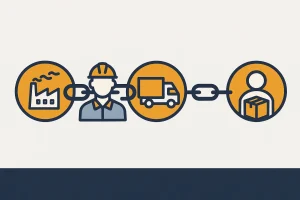
Every party in your supply chain carries a legal obligation to prevent fatigue breaches, overloading, and unsafe vehicle operation. Under the Heavy Vehicle National Law (HVNL), Chain of Responsibility requires all parties in the supply chain to prevent breaches like fatigue, speeding, and overloading. This means transport operators, consignors, schedulers, loaders, and executives must all verify compliance through systematic checks.
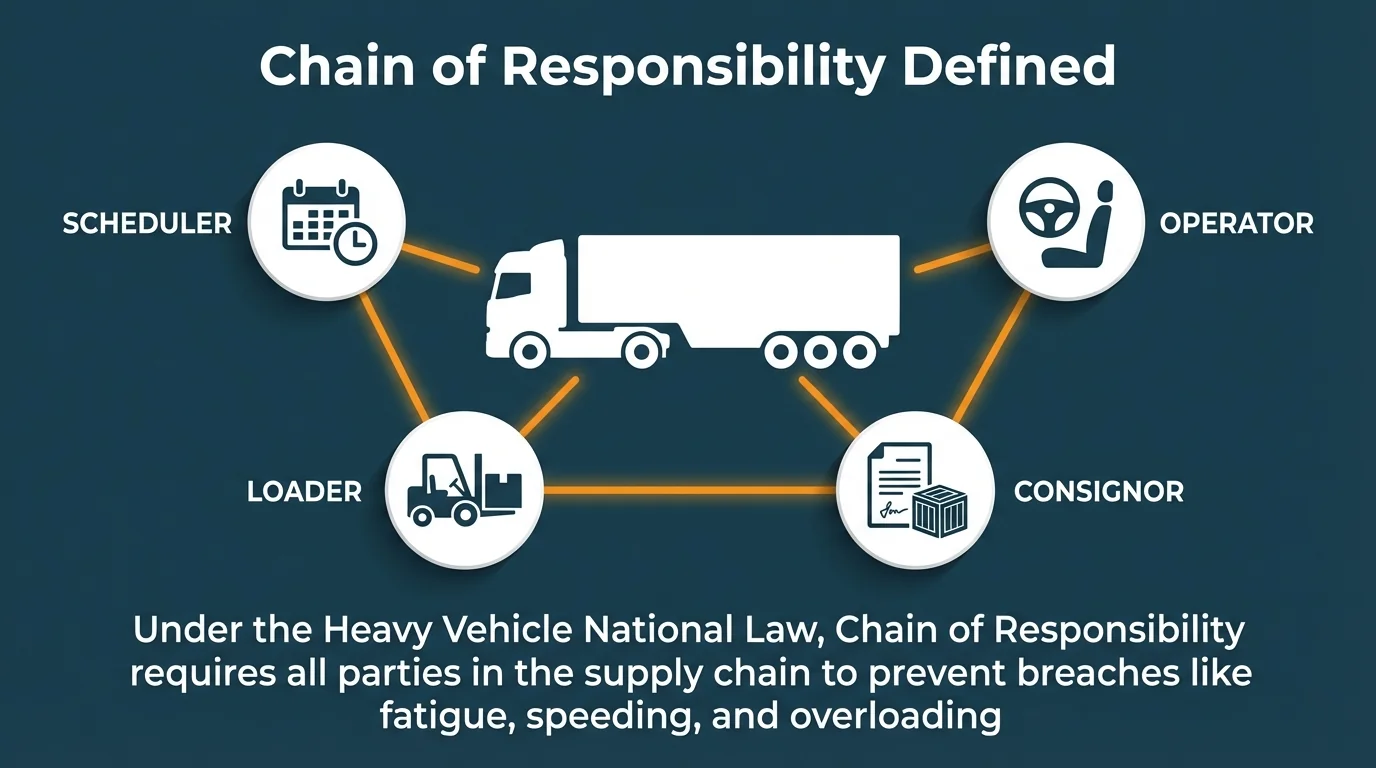
A robust CoR compliance checklist transforms abstract legal obligations into actionable verification steps. It ensures each party understands their Primary Duty and executive officers fulfill their Executive Duty obligations.
This guide provides the complete Chain of Responsibility compliance checklist framework. You’ll find role-based verification points, documentation requirements, and audit tools organized around the six critical CoR risk areas under HVNL.
The result? A compliance system that protects your operations from legal exposure while improving safety outcomes across your entire supply chain.
What is a Chain of Responsibility Compliance Checklist?
A CoR compliance checklist is a systematic verification tool. It confirms that all parties in the heavy vehicle supply chain meet their legal obligations under the HVNL.
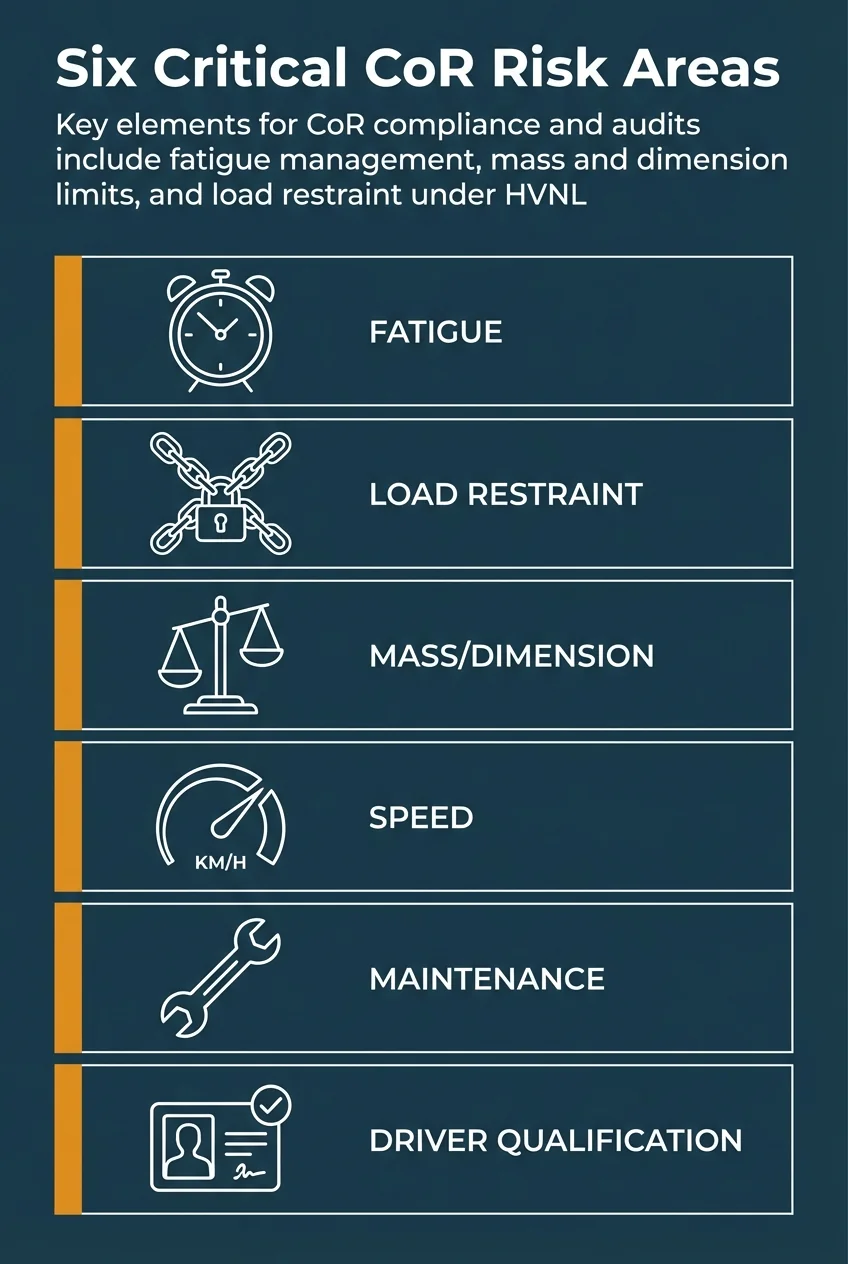
The checklist addresses six primary CoR risk areas. These include fatigue management, load restraint, mass and dimension limits, speed compliance, vehicle maintenance, and driver qualification.
Each checklist item requires documented evidence. This means work diaries, inspection reports, service records, and training certificates must be accessible for verification.
Think of the checklist as your compliance roadmap. It translates regulatory language into practical verification steps that prevent breaches before they occur.
Purpose and Legal Foundation
The checklist serves as an audit tool for demonstrating due diligence. It provides evidence that your organization took reasonably practicable measures to eliminate or minimize CoR breaches.
Comprehensive CoR compliance approaches should verify that everyone in the supply chain understands their Primary Duty and executives their Executive Duty. This verification process forms the backbone of effective compliance systems.
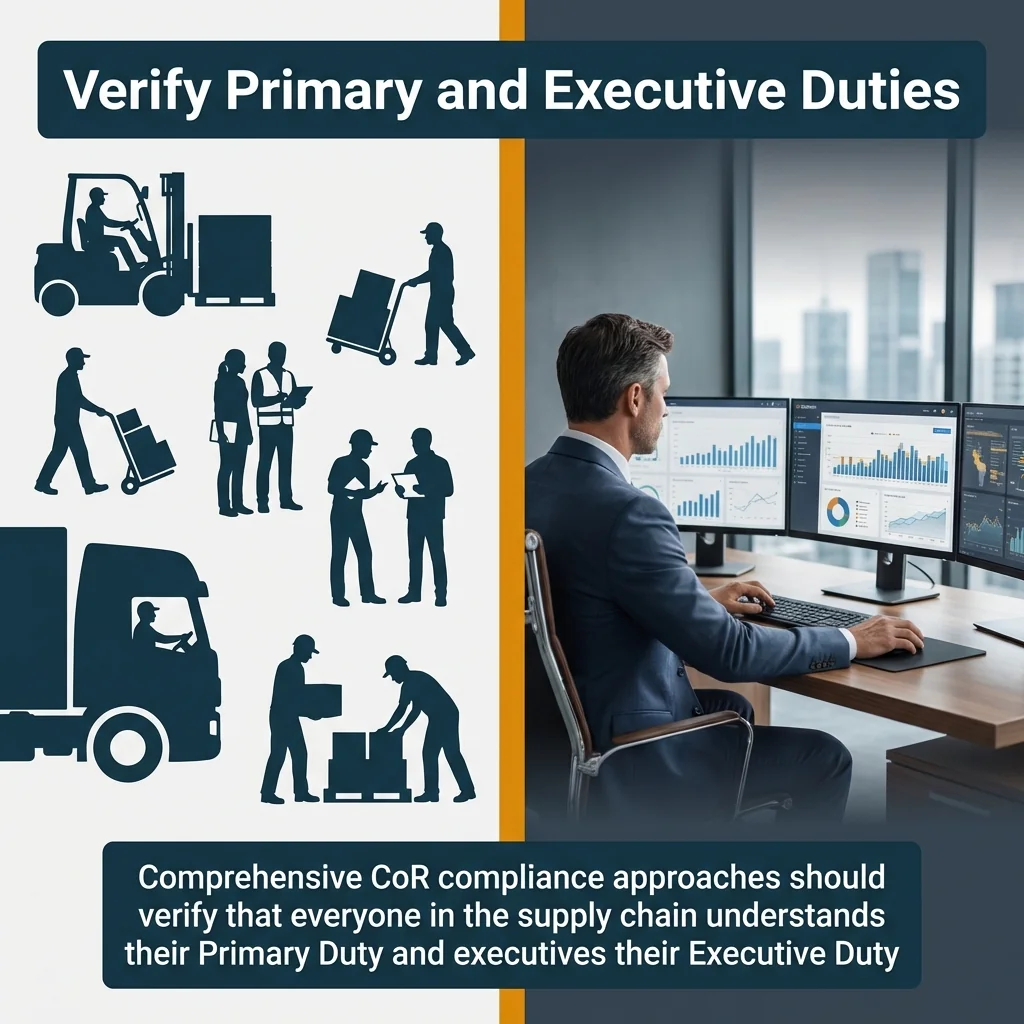
The HVNL places direct liability on multiple parties. Your checklist must reflect this shared responsibility model by assigning verification tasks to specific roles.
Checklist Components and Structure
Effective CoR compliance checklists organize verification points by risk area and responsible party. Each item includes three elements: the verification requirement, the responsible role, and the evidence required.
The structure typically follows a yes/no format. This enables quick auditing and identifies gaps immediately during inspections.
| Checklist Component | Purpose | Documentation Required |
|---|---|---|
| Risk Area Sections | Organize by HVNL requirements | Regulatory reference citations |
| Verification Points | Specific compliance checks | Yes/no confirmation records |
| Role Assignment | Accountability clarity | Position responsibility matrix |
| Evidence Requirements | Proof of compliance | Records retention schedule |
Your checklist should integrate with existing Safety Management Systems. This creates a unified approach to risk assessment and control measures.
Understanding CoR Parties and Their Responsibilities
Chain of Responsibility extends beyond the driver and transport operator. The HVNL identifies multiple parties who exercise control or influence over transport operations.
Each party bears a Primary Duty to ensure their actions don’t cause or contribute to breaches. This duty applies whether you’re scheduling deliveries, loading vehicles, or managing operations from an executive level.
Primary Parties in the Chain
The HVNL defines specific parties with CoR obligations. Understanding your role determines which checklist sections apply to your operations.
- Transport operators who conduct or direct heavy vehicle journeys
- Schedulers who manage or control driver work and rest times
- Loaders who load or supervise loading of heavy vehicles
- Consignors who engage services or have goods transported
- Consignees who receive goods and influence transport conditions
- Packers who prepare or assemble goods for transport
- Loading managers who control or manage loading facilities
- Executive officers who exercise strategic influence over organizations
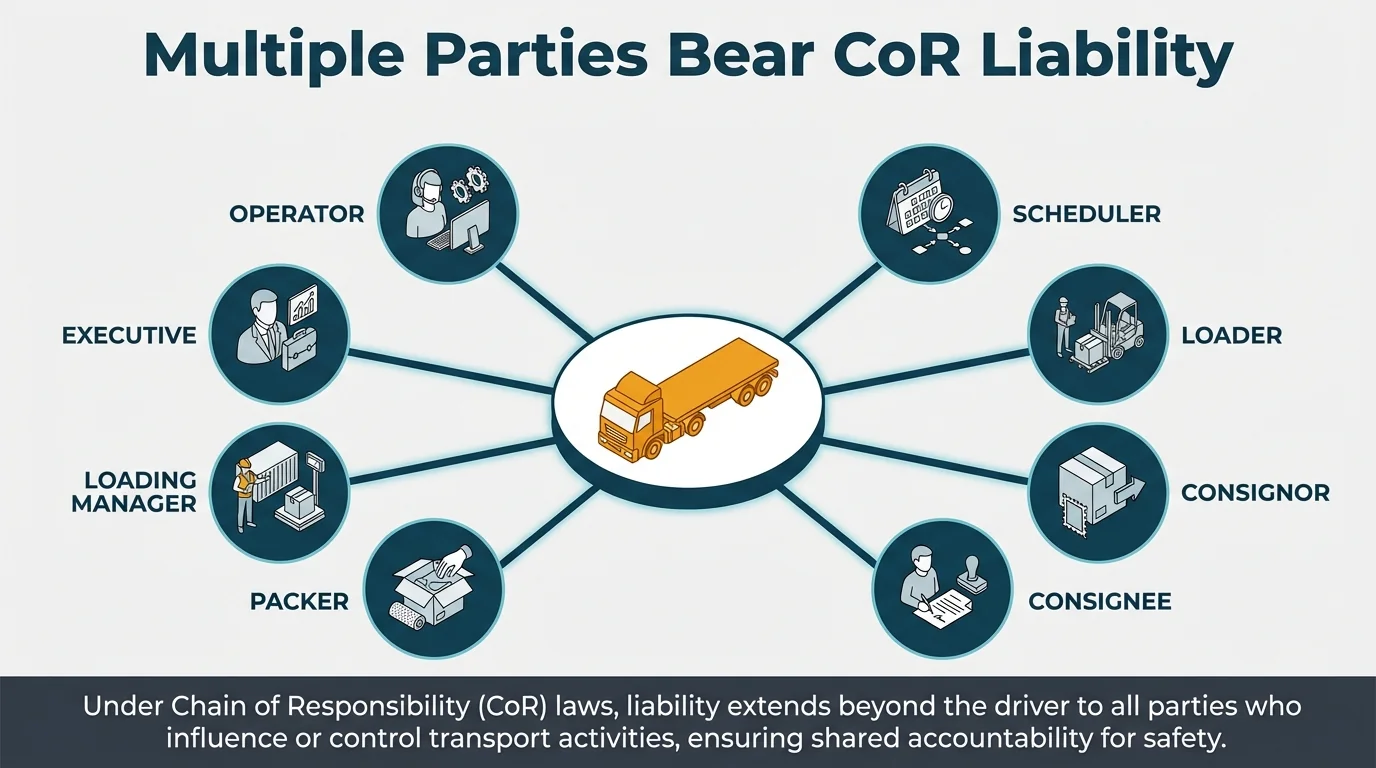
Each party must identify which aspects of the supply chain fall under their control. Your checklist must reflect this scope of influence.
Primary Duty Obligations
The Primary Duty requires each party to ensure their conduct doesn’t contribute to breaches. This means taking reasonably practicable measures to eliminate or minimize risks.
Reasonably practicable measures consider what you know or should know about the risk. They also account for available ways to eliminate or minimize that risk and the cost versus benefit of implementing controls.
Your compliance checklist verifies these measures are in place. Each verification point should link back to a specific Primary Duty obligation.
Executive Duty Requirements
Executive officers face an additional layer of responsibility. They must exercise due diligence to ensure their organization complies with HVNL requirements.
This Executive Duty includes acquiring knowledge about CoR obligations. It requires understanding operational nature and ensuring appropriate resources and processes exist.
| Executive Duty Element | Verification Requirement | Evidence Type |
|---|---|---|
| Knowledge Acquisition | CoR training completion | Training certificates and attendance records |
| Operational Understanding | Risk assessment documentation | Hazard identification reports |
| Resource Allocation | Budget and staffing reviews | Resource allocation records |
| Process Implementation | System audits and reviews | Audit reports and action plans |
Executive officers should complete dedicated sections of your CoR compliance checklist. This demonstrates their active oversight of compliance systems.
Six Critical CoR Risk Areas Under HVNL
The HVNL identifies six primary risk areas where breaches commonly occur. Your compliance checklist must address each area with specific verification points and control measures.
Key elements for CoR compliance and audits include fatigue management, mass and dimension limits, and load restraint. These areas represent the foundation of heavy vehicle safety compliance.
Fatigue Management Risk Area
Fatigue management breaches occur when drivers exceed work hours or fail to take required rest breaks. This risk area demands verification across scheduling, monitoring, and enforcement.
Your checklist should confirm work diaries are maintained correctly. It must verify journey planning allows for adequate rest breaks and driving hours stay within legal limits.
Key verification points include scheduler training, work diary audit processes, and journey time calculations. Each point requires documented evidence of compliance.
Load Restraint Risk Area
Load restraint failures lead to cargo shifts, vehicle instability, and road hazards. This area covers securing methods, equipment condition, and load documentation.
Verification steps include checking restraint equipment inspection schedules. You must confirm loaders receive competency training and load plans exist for complex cargo.
The checklist should require photographic evidence of restrained loads. It must verify compliance with the Load Restraint Guide requirements.
Mass and Dimension Risk Area
Mass limit breaches involve vehicles exceeding gross vehicle mass or axle load limits. Dimension violations relate to height, width, and length restrictions.
Your checklist must verify weighbridge calibration and usage procedures. It should confirm processes exist for checking axle load distribution before departure.
Documentation requirements include weighbridge certificates and permit verification for over-dimension loads. Heavy vehicle operators need access to vehicle mass specifications.
Speed Compliance Risk Area
Speed breaches occur through journey schedules that require excessive speeds. They also result from inadequate monitoring of driver behavior and vehicle performance.
Verification points include journey time calculations that allow legal speed compliance. Your checklist should confirm speed limiter installation and GPS monitoring systems exist.
Evidence requirements include speed monitoring reports and corrective action records. These demonstrate active management of speed-related risks.
Vehicle Maintenance Risk Area
Maintenance breaches involve operating vehicles with roadworthiness defects. This risk area covers inspection schedules, defect reporting, and service record keeping.
Your compliance checklist must verify pre-start inspection processes. It should confirm service schedules align with manufacturer specifications and regulatory requirements.
Documentation includes maintenance logs, defect reports, and repair records. These records prove vehicles meet roadworthiness standards before each journey.
Driver Qualification Risk Area
Driver qualification breaches occur when unlicensed or improperly licensed drivers operate heavy vehicles. This area extends to medical fitness and competency verification.
Checklist items should verify license checking procedures at engagement. They must confirm medical certificate currency and training records for specialized vehicle types.
Evidence requirements include license copies, medical certificates, and competency assessments. These documents demonstrate drivers meet legal qualifications for their assigned vehicles.
Fatigue Management Checklist Items
Fatigue management represents the most complex CoR risk area. It requires coordination between schedulers, drivers, and operators to ensure work and rest hours stay within legal limits.
Your checklist must address both the planning phase and the monitoring phase. This means verifying journey schedules before departure and confirming actual compliance during operations.
Journey Planning and Scheduling Verification
Journey planning verification confirms schedules allow for required rest breaks. It checks that total driving hours stay within daily and weekly limits.
Checklist items should include:
- Journey time calculations include mandatory rest breaks
- Schedules account for road conditions and loading/unloading time
- Buffer time exists for unforeseen delays without rushing
- Schedulers have completed HVNL fatigue management training
- Journey plans are documented and provided to drivers
Each item requires a yes/no response. No responses trigger immediate review and corrective action before journey commencement.
Work Diary and Record Keeping
Work diaries provide legal evidence of driver work and rest hours. Your checklist must verify drivers maintain these records correctly and supervisors audit them regularly.
Verification points include checking work diary format compliance. You must confirm entries are made in real-time and supervisors review diaries weekly.
The checklist should require evidence of non-compliance investigation. This demonstrates your organization takes corrective action when breaches occur.
| Work Diary Element | Verification Check | Frequency |
|---|---|---|
| Daily entries completed | All work and rest periods recorded | Every journey |
| Supervisor review | Signed audit of diary accuracy | Weekly |
| Breach investigation | Root cause analysis documented | Within 48 hours |
| Record retention | Diaries stored for required period | Ongoing |
Fitness for Duty Declarations
Driver fatigue extends beyond work hours. Medical conditions, medications, and personal circumstances affect fitness for duty.
Your checklist should verify drivers complete fitness declarations before each shift. It must confirm processes exist for drivers to report fatigue concerns without penalty.
Documentation requirements include signed declarations and fatigue incident reports. These records demonstrate proactive fatigue risk management beyond work hour compliance.
Load Restraint and Mass Compliance Verification
Load restraint and mass compliance protect road infrastructure and prevent cargo-related incidents. These risk areas require verification at multiple points throughout the loading and transport process.
Your checklist must address equipment condition, loading procedures, and verification processes. Each party involved in loading carries specific responsibilities.
Load Restraint Equipment Inspection
Restraint equipment must meet Australian Standards and remain in serviceable condition. Your checklist should verify regular inspection schedules exist and damaged equipment is removed from service.
Verification items include checking equipment tagging systems. You must confirm inspection dates and working load limits are clearly marked on all restraint devices.
Evidence requirements include equipment registers and inspection checklists. These documents prove restraint equipment undergoes regular condition assessment.
Loading Procedures and Documentation
Proper loading procedures prevent cargo shift and ensure restraint effectiveness. Your checklist must verify loaders receive competency training and follow documented loading methods.
Key verification points include:
- Loaders hold current competency certificates
- Loading procedures document restraint methods for cargo types
- Load plans exist for specialized or complex cargo
- Photographic evidence captures restrained loads before departure
- Load documentation travels with the vehicle
Each item links to specific requirements in the Load Restraint Guide. Your organization should reference these requirements in loading procedure documents.
Mass Verification and Weighing Procedures
Mass limit compliance requires accurate vehicle weighing and axle load verification. Your checklist should confirm weighbridge access and usage procedures.
Verification items must check weighbridge calibration currency. They should confirm processes exist for redistributing loads when mass limits are exceeded.
Documentation includes weighbridge certificates for every loaded vehicle. It also requires records showing how mass data influences loading decisions and journey planning.
| Mass Compliance Check | Responsible Party | Required Documentation |
|---|---|---|
| Weighbridge calibration | Loading manager | Current calibration certificate |
| Pre-departure weighing | Loader/operator | Weighbridge docket with vehicle details |
| Axle load distribution | Loader | Load placement diagram or photo |
| Overload procedure | Loading manager | Documented redistribution process |
Vehicle Maintenance and Roadworthiness Checks
Vehicle maintenance compliance ensures heavy vehicles meet roadworthiness standards. This risk area prevents mechanical failures that endanger road users and cause operational disruptions.
Your compliance checklist must verify both scheduled maintenance and pre-journey inspections. These verification points demonstrate active maintenance management.
Pre-Start Inspection Procedures
Pre-start inspections identify defects before vehicles enter service. Your checklist should confirm drivers complete these inspections using standardized checklists.
Verification items include checking inspection checklist formats. You must confirm drivers receive training in defect identification and reporting procedures.
Evidence requirements include completed inspection checklists for every journey. These documents prove systematic pre-departure vehicle checks occur.
The checklist should verify defect reporting processes. This means confirming channels exist for drivers to report issues and vehicles with defects don’t enter service until repaired.
Scheduled Maintenance Compliance
Scheduled maintenance follows manufacturer specifications and regulatory requirements. Your checklist must verify service intervals are documented and maintenance occurs on schedule.
Verification points should check maintenance schedule creation. They must confirm service records detail work completed and qualified technicians perform repairs.
- Maintenance schedules exist for all fleet vehicles
- Service intervals align with manufacturer recommendations
- Service records document date, work performed, and technician details
- Outstanding maintenance items are tracked and prioritized
- Vehicles overdue for service are removed from operation
Each verification point requires documented evidence. This demonstrates your organization maintains vehicles proactively rather than reactively.
Defect Management and Repair Records
Defect management systems track issues from identification through repair completion. Your checklist should verify defect registers exist and show clear resolution timelines.
Verification items include checking defect severity classification systems. You must confirm critical defects receive immediate attention and prevent vehicle operation.
Documentation requirements include defect reports with repair completion records. These prove defects are resolved before vehicles return to service.
Speed Compliance and Journey Planning
Speed compliance verification prevents journey schedules that require illegal speeds. This risk area addresses both planning decisions and operational monitoring.
Your checklist must confirm schedulers account for speed limits when calculating journey times. It should verify monitoring systems track actual vehicle speeds during operations.
Journey Time Calculation Verification
Accurate journey time calculations prevent drivers from speeding to meet delivery schedules. Your checklist should verify calculation methods include appropriate speed assumptions.
Verification items must check that journey plans use legal speed limits for calculations. They should confirm buffer time exists for traffic delays and rest breaks.
Evidence requirements include documented journey plans with time calculations. These prove schedulers consider speed limits when setting delivery timeframes.
Speed Monitoring Systems
GPS monitoring and speed limiters provide objective evidence of speed compliance. Your checklist should verify these systems are installed, calibrated, and monitored regularly.
Verification points include checking speed limiter settings match regulatory requirements. You must confirm GPS data is reviewed and speed violations trigger investigations.
| Speed Monitoring Element | Verification Requirement | Action Trigger |
|---|---|---|
| Speed limiter installation | Calibration certificates current | Annual recalibration due date |
| GPS monitoring activation | All vehicles tracked in real-time | Device malfunction alerts |
| Speed violation review | Weekly report analysis | Three violations in rolling month |
| Driver counseling | Documented coaching sessions | Repeated speed breaches |
Documentation should include speed monitoring reports and corrective action records. These demonstrate active management of speed-related risks throughout operations.
Documentation and Record Keeping Requirements
Comprehensive documentation proves compliance when regulators conduct audits. Your CoR compliance checklist must verify record keeping systems capture all required evidence.
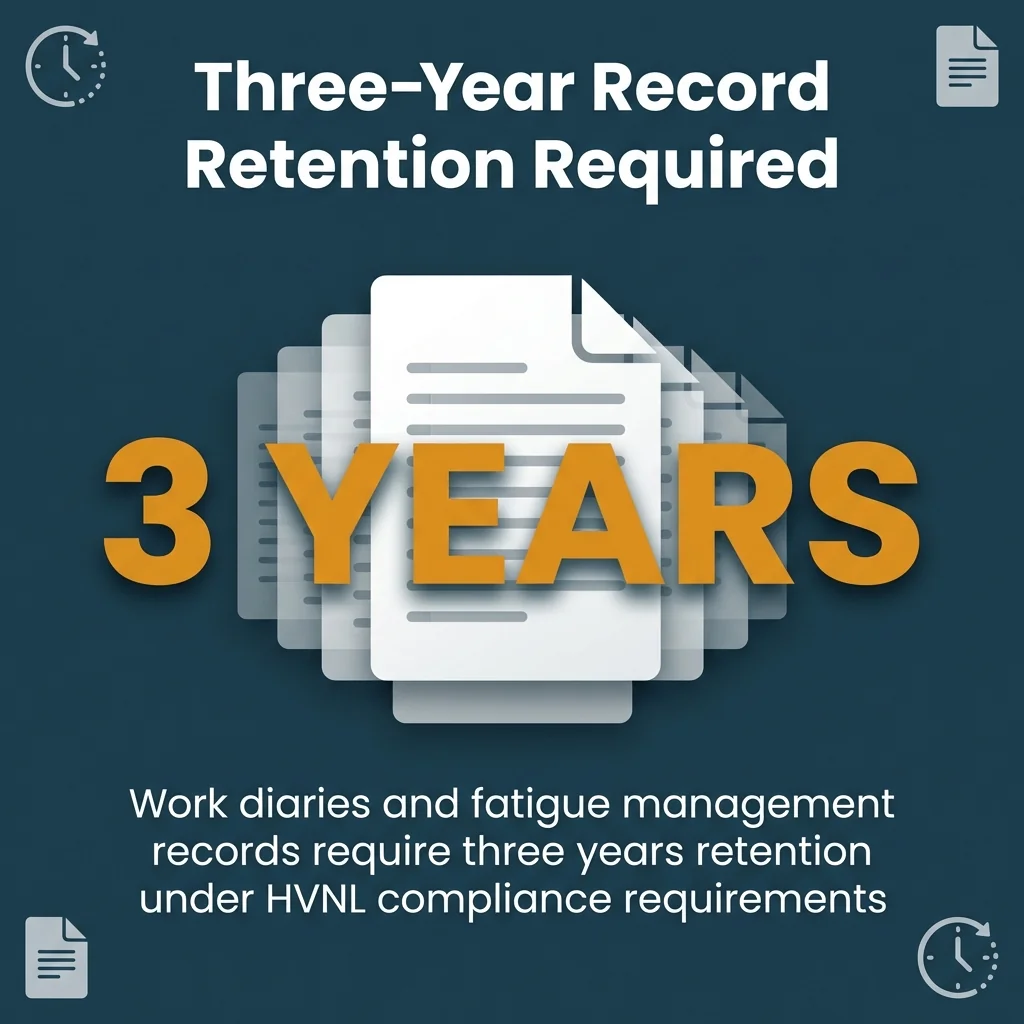
Record retention periods vary by document type. The HVNL requires specific records be kept for minimum periods, with some extending to three years.
Essential Compliance Records
Your documentation system should capture evidence across all six CoR risk areas. Each record type serves as proof of specific compliance measures.
Essential records include:
- Work diaries and fatigue management records (three years retention)
- Maintenance logs and service records (vehicle lifetime)
- Load documentation and restraint verification (one year minimum)
- Weighbridge certificates and mass records (one year minimum)
- Speed monitoring reports and GPS data (six months minimum)
- Training certificates and competency assessments (currency plus three years)
- Defect reports and repair completion records (vehicle lifetime)
Your checklist should verify these records are accessible, organized, and stored securely. This means confirming both physical and digital backup systems exist.
Audit Trail and Verification Evidence
An audit trail demonstrates systematic compliance rather than isolated compliance activities. Your checklist must verify processes capture who performed checks, when they occurred, and what results were found.
Verification items should check that compliance documents include date stamps. They must confirm authorized personnel sign off on critical verification points.
Evidence requirements include audit logs showing regular compliance reviews. These prove your organization monitors CoR obligations continuously rather than reactively.
Record Keeping System Requirements
Effective record keeping systems balance accessibility with security. Your checklist should verify authorized personnel can retrieve records quickly during audits or investigations.
Verification points include checking system backup procedures. You must confirm disaster recovery plans exist and records remain protected from loss or damage.
The checklist should require evidence of system testing. This demonstrates your organization can actually retrieve required records when needed.
Documentation requirements include system user guides and access logs. These prove appropriate personnel can use the system and unauthorized access is prevented.
Building Your Complete CoR Compliance System
A CoR compliance checklist forms one component of your complete compliance system. The checklist provides the verification framework, but effective implementation requires supporting processes and resources.
Your system should integrate checklist verification with risk assessment methodologies. This creates a proactive approach where potential breaches are identified before they occur.
Start by assigning ownership of checklist sections to specific roles. Each party in your Chain of Responsibility needs clear accountability for their verification requirements.
Schedule regular compliance audits using the checklist as your primary tool. Monthly internal audits identify gaps while annual external audits provide independent verification.
Train all supply chain parties on their checklist responsibilities. This means schedulers understand fatigue verification, loaders know restraint requirements, and executives can demonstrate due diligence.
Document your findings after each checklist review. Non-compliance items require corrective action plans with clear timelines and responsible parties.
Review and update your checklist annually. HVNL requirements evolve, and your verification points must reflect current regulatory expectations.
The investment you make in comprehensive CoR compliance protects your organization legally. More importantly, it creates supply chain operations where safety comes first and breaches become rare exceptions rather than regular occurrences.
Your complete Chain of Responsibility compliance starts with understanding the fundamental principles of supply chain accountability. Each verification point in your checklist should link back to these foundational concepts.