Transportation safety is entering an era of measurable transformation driven by predictive analytics, automated monitoring, and intelligent speed management. Cities are implementing AI-powered video analytics to identify high-risk intersections before crashes occur, using real-time data to deploy targeted interventions for vulnerable road users including pedestrians, cyclists, and motorcyclists.
This shift from reactive to proactive safety measures represents the most significant change in traffic safety strategy since Vision Zero goals were established. Rather than waiting for fatalities to reveal dangerous locations, transportation safety agencies now leverage data analytics and artificial intelligence to prevent crashes through infrastructure improvements, speed reduction technologies like Intelligent Speed Assistance, and automated enforcement systems.

The Transforming Transportation 2026 conference held on January 22, 2026, in the UAE showcased how global operators are implementing these technologies at scale. From autonomous transit networks in Dubai to predictive safety platforms in European cities, real-world case studies demonstrate the practical application of technology-driven road safety solutions.
This analysis examines specific implementations across multiple cities, evaluating the Safe System Approach through the lens of data-driven decision making. You’ll see how transportation departments measure success, what infrastructure improvements deliver the greatest injury reduction, and which policy reforms enable sustainable mobility while protecting the most vulnerable users on our roads.
The Current State of Transportation Safety: A Global Challenge
Road safety remains one of the most pressing public health challenges worldwide. Traffic fatalities continue to claim lives across all transportation modes, with vulnerable road users bearing disproportionate risk.
Pedestrians face the highest fatality rates in urban environments. Cyclists experience increasing exposure as cities expand bike infrastructure without adequate protective measures. Motorcyclists account for a significant portion of serious injuries despite representing a smaller percentage of total vehicle miles traveled.
Traditional approaches to traffic safety followed a reactive pattern. Agencies identified dangerous locations after crashes occurred, then implemented countermeasures based on historical data. This method created an inherent delay between risk emergence and intervention deployment.
Vision Zero initiatives challenged this reactive framework by establishing a fundamental principle: zero traffic fatalities is an achievable goal. Cities adopting Vision Zero commit to comprehensive safety strategies that prioritize human life over traffic flow, recognizing that crashes result from system design failures rather than individual mistakes alone.
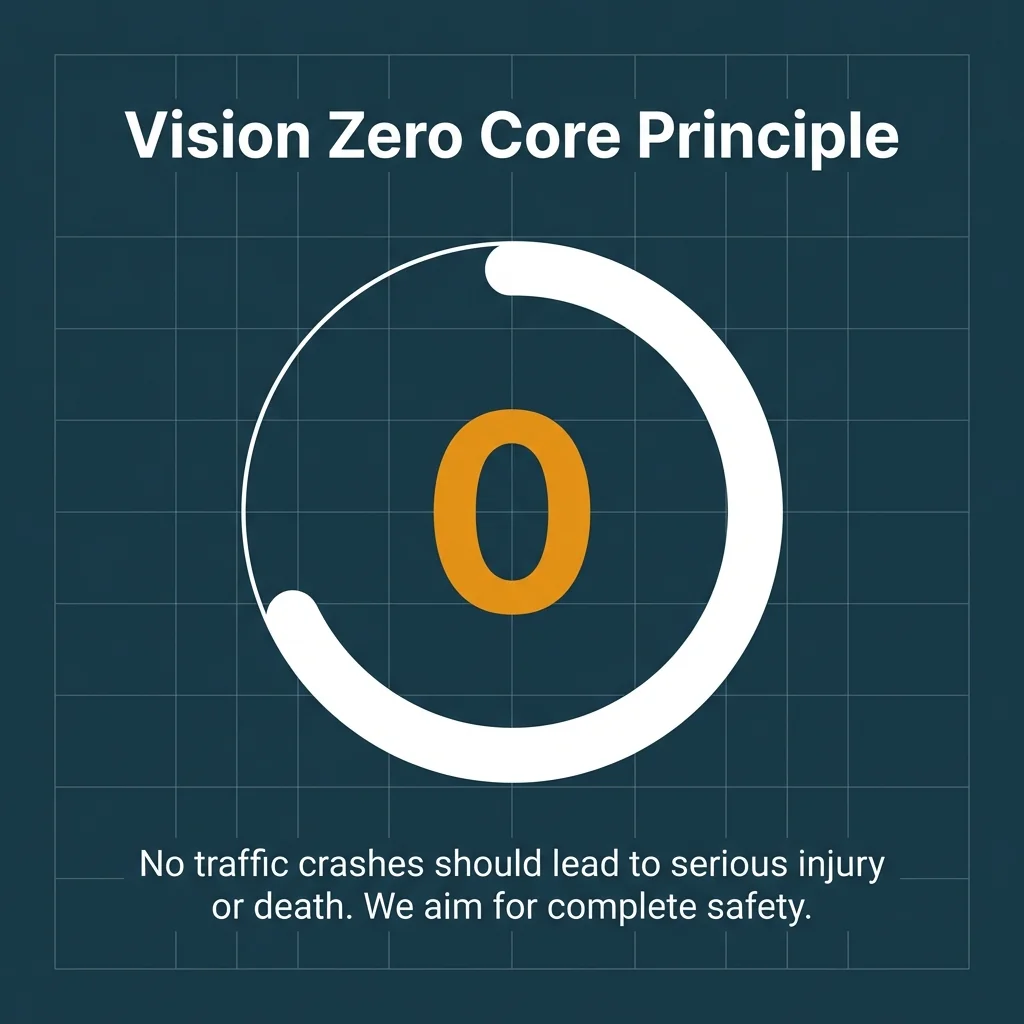
The Safe System Approach provides the operational framework for Vision Zero goals. This methodology acknowledges human fallibility and designs transportation systems to minimize fatal outcomes when crashes occur. Key elements include speed management, infrastructure design that separates conflicting movements, and enforcement aligned with safety priorities.
| Safety Challenge | Traditional Approach | Data-Driven Transformation |
|---|---|---|
| High-risk intersections | Identify after multiple crashes | Predict using traffic pattern analysis |
| Pedestrian safety | Add crosswalks after fatalities | Deploy real-time monitoring and dynamic signals |
| Speed enforcement | Manual police presence | Automated detection and Intelligent Speed Assistance |
| Vulnerable user protection | Reactive infrastructure changes | Proactive design based on predictive analytics |
Transportation agencies now recognize that waiting for crashes to accumulate sufficient statistical significance wastes lives. The shift toward predictive safety measures represents a fundamental change in how we approach road safety, moving from historical analysis to forward-looking risk identification.
Technology-Driven Safety Transformation: AI and Data Analytics
Artificial intelligence is fundamentally changing how transportation safety professionals identify and address risks. AI systems analyze video feeds from traffic cameras, detecting near-miss events that traditional methods overlook.
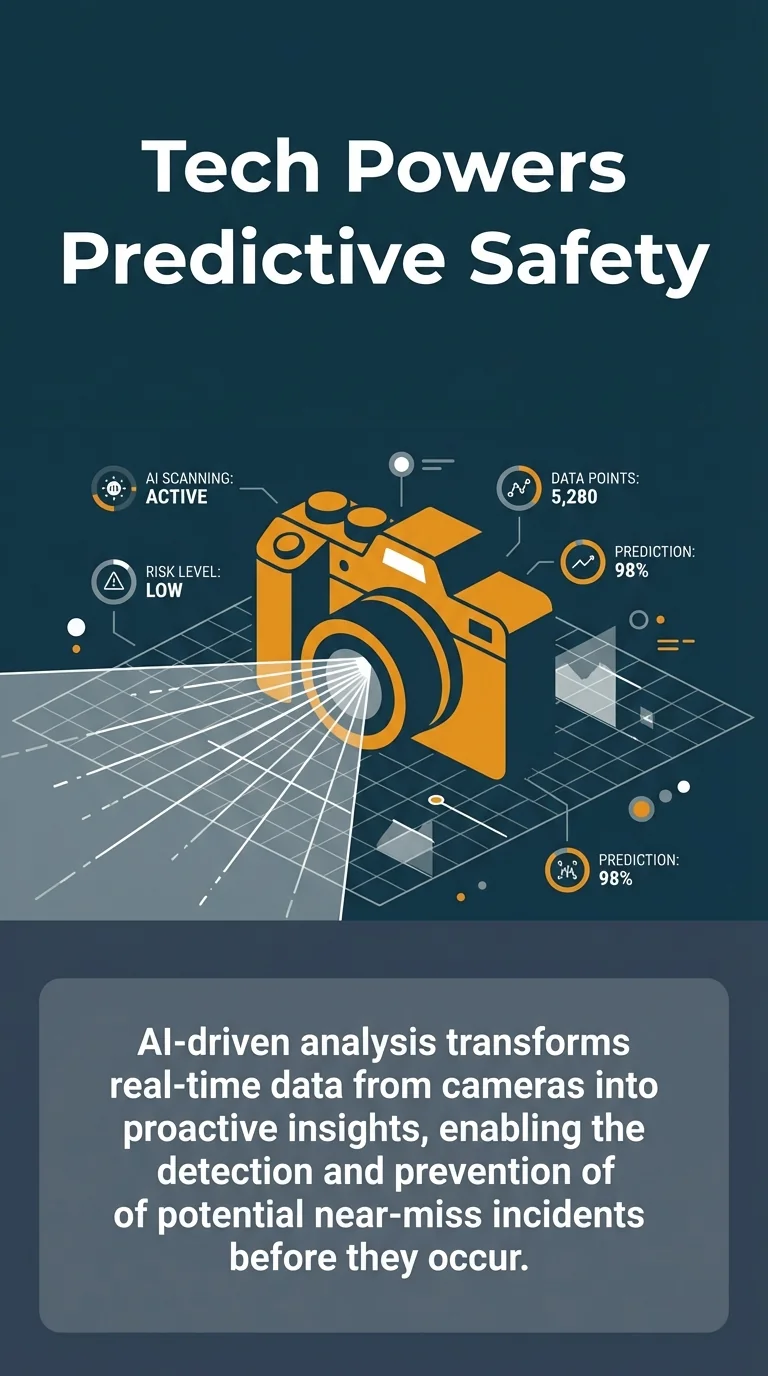
These near-miss analytics provide early warning signals about emerging dangers. When an intersection shows increasing close-call incidents between vehicles and pedestrians, agencies can intervene before the first fatality occurs. This proactive approach delivers measurable safety improvements without requiring historical crash data.
Data analytics platforms aggregate information from multiple sources including traffic sensors, weather systems, emergency response records, and infrastructure inventories. Machine learning algorithms identify patterns connecting road design features to crash severity, enabling evidence-based infrastructure improvements.
Predictive Modeling for Risk Assessment
Predictive analytics takes historical crash data and combines it with environmental factors to forecast where future incidents are most likely. Models consider traffic volume, road geometry, lighting conditions, weather patterns, and land use characteristics.
Transportation departments use these risk scores to prioritize infrastructure investments. Rather than spreading limited budgets across many locations, agencies concentrate resources where predictive models indicate the highest potential for fatality reduction.
The accuracy of these models improves as more data becomes available. Real-time traffic information feeds continuously update risk assessments, allowing dynamic allocation of enforcement resources and variable speed limits that respond to current conditions.
Automated Detection and Real-Time Response
Computer vision systems now monitor traffic safety in real-time. Cameras equipped with AI software detect vehicles exceeding speed limits, identify pedestrians in crosswalks, and recognize dangerous driving behaviors including red-light violations and unsafe lane changes.
Automated detection enables immediate response. When systems identify speeding in school zones, they trigger variable message signs warning drivers to slow down. When pedestrian volumes increase at unmarked crossing locations, systems alert traffic management centers to deploy temporary safety measures.
This real-time monitoring extends beyond traditional enforcement. AI systems track near-miss events, providing safety managers with data on incidents that never appear in crash reports but indicate emerging risks requiring intervention.
Real-World Success Stories: Cities Leading the Change
Dubai has emerged as a leader in transportation safety transformation through ambitious technology adoption. The World Governments Summit 2026 concluded in February 2026 with announcements including a public rollout of 1,000 driverless RT6 taxis in Q1 2026, demonstrating commitment to autonomous vehicle integration as a safety strategy.
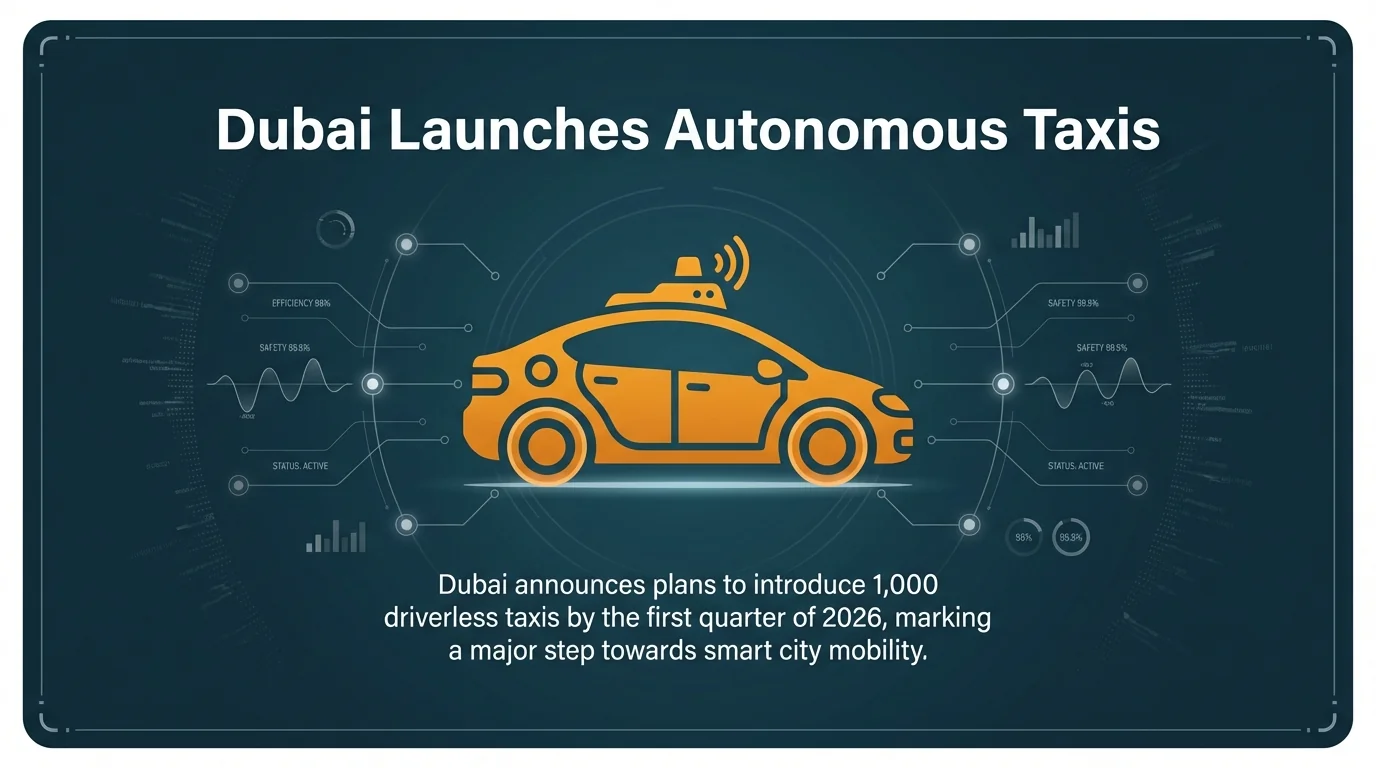
The city’s approach combines multiple technologies including automated transit networks and underground people-mover systems. These infrastructure investments separate vulnerable road users from high-speed vehicle traffic, applying Safe System principles at scale.
European cities have implemented extensive speed management programs backed by automated enforcement. Speed reduction in urban areas has delivered measurable decreases in pedestrian fatalities, with data analytics confirming the effectiveness of lower speed limits combined with infrastructure calming measures.
Technology Integration in Practice
Successful implementations share common characteristics. Cities start with comprehensive data collection, installing sensors and cameras across their transportation networks. This baseline data informs risk assessment and intervention prioritization.
Agencies then deploy targeted safety measures based on predictive analytics. High-risk intersections receive infrastructure improvements including protected turn phases, leading pedestrian intervals, and enhanced visibility treatments. Corridors with elevated speeds get automated enforcement combined with physical traffic calming.
Continuous monitoring measures intervention effectiveness. Real-time data shows whether crashes decrease, near-misses decline, and compliance improves. Agencies adjust strategies based on measured outcomes rather than assumptions about what should work.
Collaboration and Stakeholder Engagement
Transportation safety transformation requires coordination across multiple agencies and jurisdictions. Police departments manage enforcement priorities, public works departments implement infrastructure changes, and planning agencies integrate safety into land use decisions.
Successful cities establish cross-functional teams with clear authority to implement safety measures. These teams include data analysts who identify risks, engineers who design solutions, and communications specialists who build public support for safety investments including speed reduction.
Community engagement ensures that safety improvements address local priorities. Residents provide ground-level knowledge about dangerous locations and traffic patterns that data systems might miss. This combination of predictive analytics and community input creates comprehensive safety programs.
Protecting Vulnerable Road Users: Pedestrians, Cyclists, and Motorcyclists
Vulnerable road users face disproportionate risk in transportation systems designed primarily for vehicle movement. Pedestrians lack protective barriers when crashes occur. Cyclists have minimal protection beyond helmets. Motorcyclists travel at vehicle speeds without the safety features that protect car occupants.
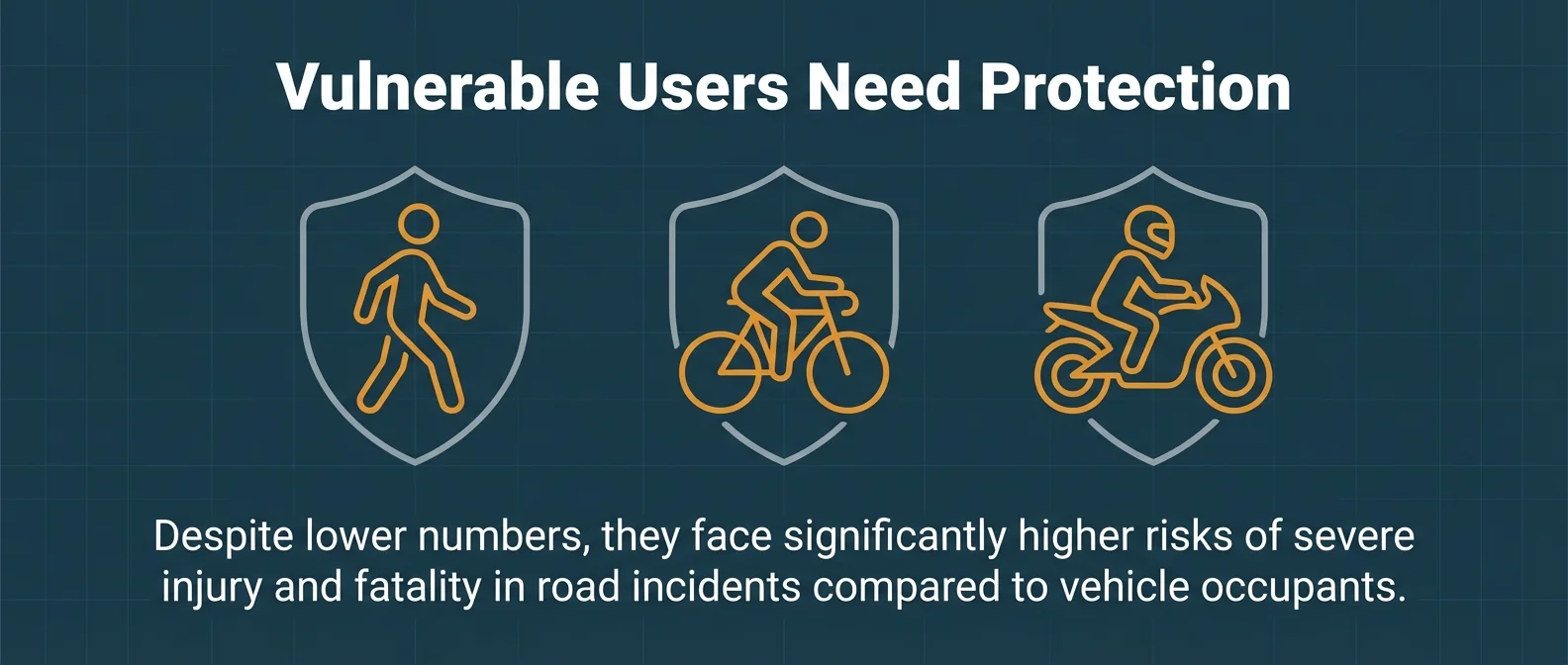
Vision Zero strategies prioritize these users through infrastructure design that separates vulnerable users from high-speed traffic. Protected bike lanes use physical barriers rather than painted lines. Pedestrian refuge islands break long crossings into manageable segments. Motorcycle-friendly road design eliminates hazards including edge drop-offs and slippery surface treatments.
Pedestrian Safety Innovations
AI-powered crosswalk systems detect pedestrians waiting to cross and automatically extend signal timing. These adaptive systems recognize slower walkers including elderly users and families with children, providing sufficient crossing time without manual button activation.
Leading pedestrian intervals give people in crosswalks a head start before vehicles receive green signals. This simple timing change increases driver awareness and reduces turning conflicts, particularly at intersections with heavy pedestrian volumes.
Infrastructure improvements include high-visibility crosswalk markings, pedestrian-scale lighting, and curb extensions that reduce crossing distances. Data analytics identify locations where these treatments deliver the greatest fatality reduction based on traffic patterns and crash history.
Cyclist Protection Strategies
Protected bike lane networks separate cyclists from vehicle traffic using physical barriers or grade separation. Cities implementing connected networks see higher cycling rates and lower crash rates compared to facilities with gaps requiring cyclists to merge with traffic.
Intersection treatments address the highest-risk locations for cyclist crashes. Protected intersections use concrete islands to create separate signal phases for bikes, eliminating right-hook and left-cross conflicts with turning vehicles.
Video analytics monitor bike lane encroachment by vehicles. Real-time enforcement supported by automated detection systems keeps lanes clear, ensuring that safety infrastructure functions as designed rather than becoming de facto parking spaces.
Motorcycle Safety Considerations
Motorcyclists benefit from infrastructure improvements including consistent road surfaces, clear lane markings, and forgiving roadside design. Small details matter: smooth pavement transitions, appropriate curve banking, and visible edge treatments reduce single-vehicle motorcycle crashes.
Speed management protects motorcyclists who face severe injury risk in high-speed crashes. Reducing traffic speeds on roads with mixed vehicle types decreases both crash frequency and severity for motorcycle riders.
Data-driven analysis identifies hazardous locations specific to motorcycles including curves with insufficient sight distance and intersections where left-turning vehicles frequently violate motorcycle right-of-way. Targeted improvements at these locations reduce motorcycle fatalities more effectively than system-wide interventions.
From Reactive to Proactive: Predictive Safety Measures
The transformation from reactive to proactive safety represents the most significant advancement in transportation safety management. Rather than waiting for crashes to reveal dangerous conditions, agencies now identify and mitigate risks before injuries occur.
Predictive safety measures rely on comprehensive data collection across transportation networks. Sensors monitor traffic speeds, volumes, and movements. Weather stations track conditions affecting road safety. Emergency response systems document crashes and near-misses. Integration platforms combine these data streams into unified risk assessments.
Real-Time Risk Monitoring
Real-time monitoring systems track current conditions across road networks. When weather creates hazardous conditions, systems automatically adjust speed limits and activate warning signs. When special events increase pedestrian volumes, systems alert operators to deploy additional safety resources.
Video analytics provide continuous safety monitoring without human observers. AI systems detect speeding, identify vehicles running red lights, and recognize dangerous driving behaviors including aggressive lane changes and following too closely.
These automated systems generate alerts when conditions exceed safety thresholds. Traffic management centers receive notifications about emerging risks, enabling rapid deployment of countermeasures including enforcement resources, temporary traffic control, and real-time driver warnings.
Intervention Effectiveness Measurement
Data analytics platforms measure the effectiveness of safety interventions through before-and-after comparisons. Agencies track crash rates, injury severity, and near-miss frequency to validate that improvements deliver expected safety benefits.
This evidence-based approach enables continuous program refinement. Interventions that demonstrate measurable safety improvements receive expanded deployment. Strategies that fail to reduce crashes get reevaluated and modified based on observed outcomes.
Predictive models incorporate intervention effectiveness data, improving future risk assessments. As agencies implement more safety measures, models learn which treatments work best in specific contexts, enabling increasingly precise targeting of limited resources.
Infrastructure and Design: Building Safety into the System
Physical infrastructure forms the foundation of the Safe System Approach. Road design determines vehicle speeds, separates conflicting movements, and provides forgiving environments when crashes occur.
Transportation agencies now integrate safety into project development from the earliest planning stages. Every infrastructure investment receives evaluation for potential safety impacts on all users including pedestrians, cyclists, motorcyclists, and vehicle occupants.
Speed Management Through Design
Infrastructure design controls vehicle speeds more effectively than posted limits or enforcement alone. Narrow lanes, tight curb radii, and street trees create visual environments that encourage slower driving without requiring conscious speed reduction.
Traffic calming measures including speed humps, raised crosswalks, and chicanes physically prevent high speeds. These treatments work particularly well in residential areas and near schools where protecting vulnerable road users takes priority over traffic flow.
Intelligent Speed Assistance technology provides in-vehicle speed management, automatically limiting vehicle velocity based on posted limits and detected road conditions. As this technology becomes standard equipment, infrastructure design and vehicle systems work together to eliminate speeding.
Intersection Safety Improvements
Intersections account for a disproportionate share of traffic fatalities. Improvements including roundabouts, protected left-turn phases, and pedestrian refuge islands reduce both crash frequency and severity.
Data analytics identify which intersection treatments deliver the greatest safety benefits in specific contexts. Roundabouts excel at reducing high-speed angle crashes but require adequate space. Protected turn phases prevent left-turn crashes at signalized intersections with heavy opposing traffic.
Leading pedestrian intervals and protected intersections specifically address vulnerable user safety. These treatments recognize that pedestrians and cyclists need additional protection at locations where they interact with turning vehicles.
Safe System Corridor Design
Complete street design integrates safety for all users. Separated facilities for pedestrians, cyclists, and vehicles eliminate conflicts. Grade-separated crossings provide safe connectivity without requiring vulnerable users to navigate high-speed traffic.
Access management reduces conflict points by limiting driveways and consolidating turning movements. Median barriers prevent left turns across multiple lanes. These design elements reduce crash opportunities while maintaining traffic flow.
Forgiving roadside design includes clear zones free of fixed objects, breakaway poles, and traversable slopes. When vehicles leave the roadway, forgiving design prevents crashes from becoming fatalities.
Policy, Enforcement, and Collaboration: The Human Element
Technology and infrastructure provide tools for safety transformation, but policy and enforcement translate these capabilities into real-world crash reduction. Clear policies establish safety priorities. Consistent enforcement ensures compliance with safety measures.
Vision Zero policies commit cities to eliminating traffic fatalities through comprehensive strategies addressing multiple risk factors simultaneously. These policies recognize that achieving zero deaths requires system transformation rather than incremental improvements to existing approaches.
Speed Management Policy Reform
Speed management policies establish default speed limits based on road context rather than historical traffic speeds. Urban residential streets default to lower speeds protecting pedestrians. Arterials with mixed traffic receive speed limits aligned with safety for vulnerable users including cyclists and motorcyclists.
Automated enforcement supports speed management by providing consistent consequences for violations. Speed cameras eliminate enforcement gaps while reducing dangerous police stops. Data from automated systems informs infrastructure improvements at locations with persistent speeding.
Policy reforms enable rapid speed limit changes based on safety evidence. Rather than requiring lengthy studies before reducing speeds, progressive policies allow immediate implementation with post-deployment evaluation confirming expected safety benefits.
Multi-Agency Collaboration
Transportation safety transformation requires coordination across agencies including transportation departments, police, public health, emergency services, and planning organizations. Each agency contributes unique capabilities to comprehensive safety strategies.
Transportation departments implement infrastructure improvements and operate traffic management systems. Police provide enforcement and crash investigation expertise. Public health agencies contribute injury surveillance and prevention strategies. Emergency services deliver crash response and injury data.
Formal collaboration structures including Vision Zero task forces bring these agencies together around shared safety goals. Regular meetings ensure coordinated implementation of safety measures, with data analytics providing common metrics for tracking progress.
Public Engagement and Behavior Change
Public support enables safety measure implementation, particularly for interventions that reduce traffic speeds or restrict certain movements. Communication strategies emphasize safety benefits rather than simply announcing restrictions.
Behavior change campaigns complement infrastructure and enforcement. Education about pedestrian right-of-way, safe cycling practices, and motorcycle visibility increases safety through improved road user behavior.
Community input identifies safety priorities that data systems might miss. Residents know which locations feel unsafe, where children struggle to cross streets, and which routes cyclists avoid due to perceived risk. Combining this local knowledge with predictive analytics creates comprehensive safety programs.
The Road Ahead: Future Innovations and Vision Zero Goals
Transportation safety continues evolving through new technologies and expanded implementation of proven strategies. Autonomous vehicles promise to eliminate crashes caused by human error. Advanced sensors provide more comprehensive monitoring. Artificial intelligence capabilities improve through exposure to larger datasets.
The Fourth Annual World Bank Conference on Transport Economics scheduled for March 13, 2026 will examine how transportation agencies scale successful safety interventions from pilot projects to system-wide implementation.
Public transportation expansion supports safety goals by reducing vehicle miles traveled while providing sustainable mobility. Electric vehicles eliminate tailpipe emissions while incorporating advanced safety technologies. These parallel transformations create opportunities for integrated approaches addressing both safety and climate objectives.
Emerging Technologies for Road Safety
Vehicle-to-infrastructure communication enables real-time safety warnings. Vehicles receive alerts about upcoming hazards, work zones, and traffic conditions. Infrastructure systems detect vehicles approaching intersections and adjust signal timing to prevent crashes.
Advanced driver assistance systems including automatic emergency braking, lane departure warning, and blind spot detection prevent crashes through automated interventions. As these technologies achieve wider adoption, traffic fatalities decrease even without infrastructure changes.
Artificial intelligence capabilities expand beyond video analytics into comprehensive crash prediction models incorporating dozens of risk factors. Machine learning identifies subtle patterns connecting infrastructure characteristics, weather conditions, traffic patterns, and crash outcomes.
Scaling Proven Solutions
Many cities have demonstrated successful safety transformations through Vision Zero programs. The challenge now involves scaling these successes to additional communities while adapting strategies to local contexts.
Data sharing among transportation agencies accelerates learning. Cities implementing similar safety measures share results, enabling evidence-based decisions about which interventions to prioritize. Standardized metrics facilitate comparisons across jurisdictions.
Funding mechanisms increasingly prioritize safety outcomes. Federal transportation programs reward states and cities that demonstrate measurable fatality reduction. This outcome-based funding encourages adoption of evidence-based safety strategies including infrastructure improvements, speed management, and technology deployment.
Vision Zero Progress Measurement
Achieving zero traffic fatalities requires sustained commitment over many years. Intermediate metrics track progress including crash rates, injury severity, near-miss frequency, and compliance with safety measures.
Data analytics platforms provide real-time progress monitoring against Vision Zero goals. Agencies track fatalities by user type, location, and contributing factors. This detailed analysis enables targeted interventions addressing specific safety gaps.
Predictive models estimate future fatality trends based on current interventions and planned improvements. These forecasts help agencies evaluate whether existing programs will achieve Vision Zero goals within target timeframes or whether additional measures are necessary.
The transformation of transportation safety from reactive crash response to proactive risk management represents a fundamental shift in how agencies approach their safety mission. Technology enables this transformation through predictive analytics, real-time monitoring, and automated interventions. Infrastructure improvements build safety into the physical environment. Policy reforms establish frameworks for rapid implementation of proven safety strategies.
Success requires sustained commitment from transportation agencies, elected officials, and communities. Vision Zero goals are achievable through comprehensive strategies addressing multiple risk factors simultaneously. As more cities demonstrate measurable progress toward eliminating traffic fatalities, the path forward becomes clearer for agencies beginning their safety transformation journeys.