A Contracting Officer’s Representative (COR) serves as the technical eyes and ears of contract oversight. The COR monitors contractor performance against technical requirements, verifies deliverable quality, and ensures compliance with contract terms without holding procurement authority.
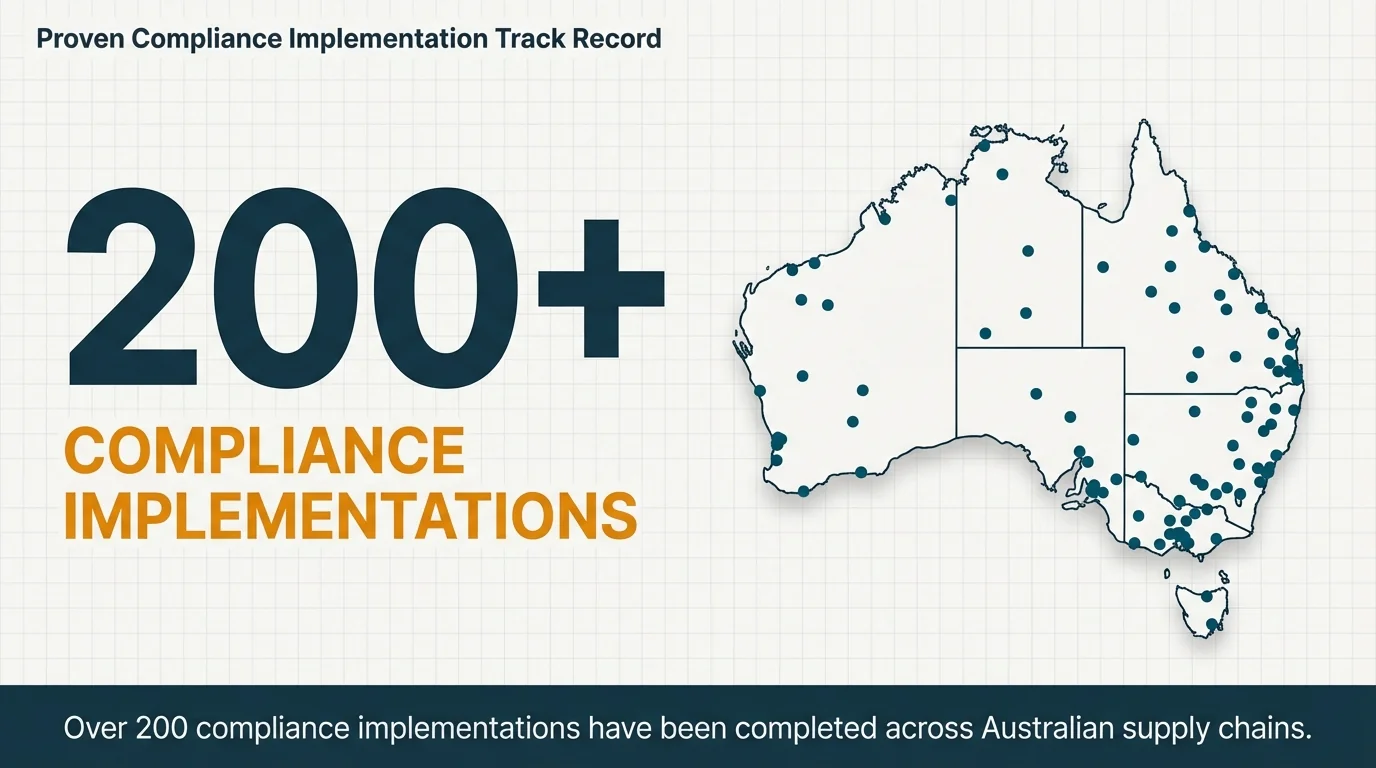
After over 200 compliance implementations across Australian supply chains, we built CoRGuard to address the gap between regulatory requirements and practical oversight execution. The platform automates what traditionally consumed COR time while strengthening the quality of technical monitoring itself.
This guide establishes the COR role within contract administration, clarifies authority boundaries, and demonstrates how systematic oversight frameworks transform compliance from reactive documentation to proactive risk management. You’ll understand designation requirements, core monitoring responsibilities, and how technology supports rather than replaces the COR’s technical judgment.
Understanding the COR Role in Government Contracting
The Contracting Officer’s Representative functions as the technical liaison between the requiring activity and contractors. This role exists because Contracting Officers cannot personally monitor every technical aspect of contract performance across their portfolio.
The COR holds delegated authority from the Contracting Officer. This delegation comes through a formal Letter of Designation that specifies exact oversight responsibilities and authority limits.
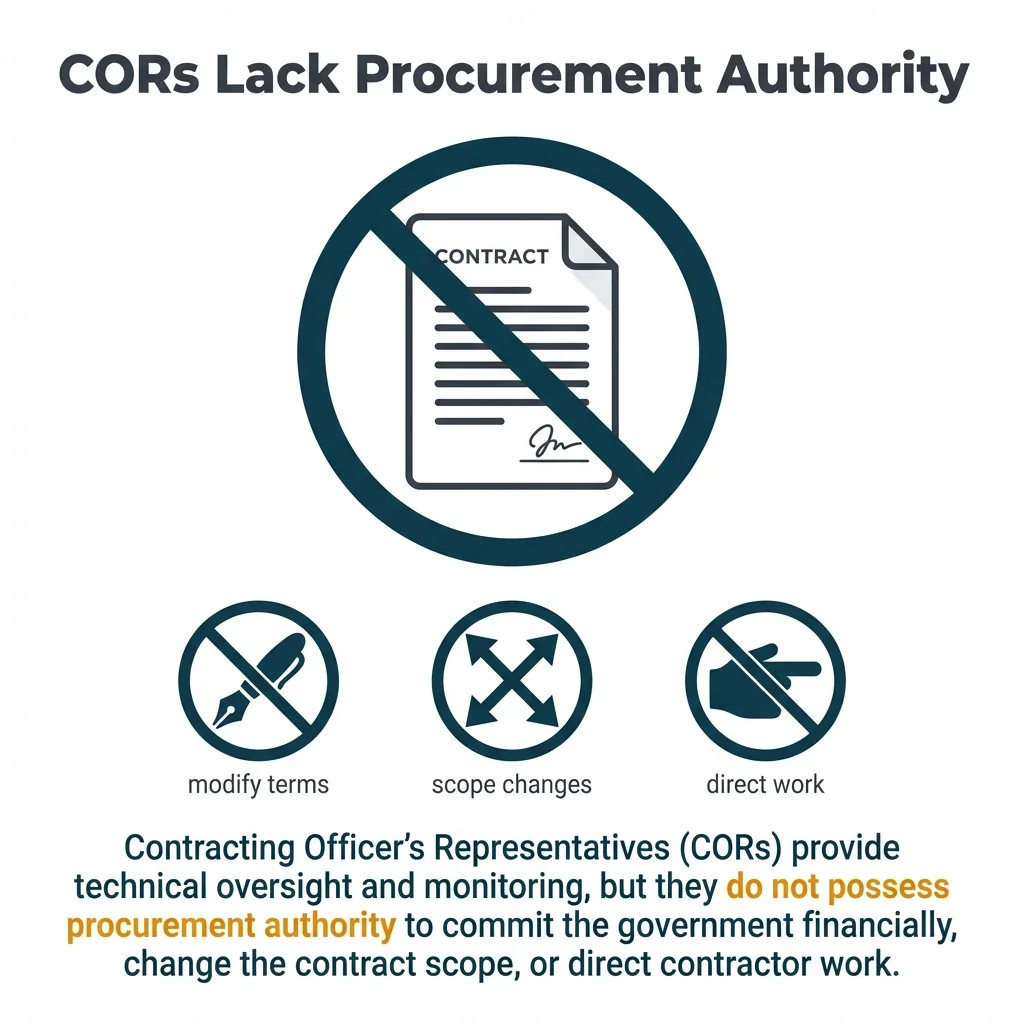
CORs do not possess procurement authority. They cannot modify contract terms, authorize scope changes, or direct contractor work beyond what the contract specifies. This boundary protects both the integrity of the procurement process and the COR from liability exposure.
The Contracting Officer and COR Relationship
The Contracting Officer maintains ultimate responsibility for contract administration. The COR operates as an extension of the Contracting Officer’s technical oversight capacity.
This relationship requires clear communication channels. The COR reports performance issues, compliance concerns, and technical deviations to the Contracting Officer, who then determines appropriate administrative action.
Effective COR performance depends on understanding this relationship. The COR provides technical expertise the Contracting Officer needs for informed decision-making while respecting procurement authority boundaries.
Authority Boundaries and Delegated Responsibilities
The Letter of Designation defines what the COR can and cannot do. Typical delegated authority includes technical inspection, deliverable acceptance, and performance documentation.
CORs cannot make commitments that bind the government financially. They cannot waive contract requirements, grant extensions, or approve changes without Contracting Officer authorization.
CoRGuard enforces these boundaries systemically. The platform flags actions requiring Contracting Officer approval and maintains an audit trail showing who authorized what decisions when.
The Foundation: COR Authority and Designation
Formal designation establishes the COR’s legal standing. Without proper designation, an individual performing oversight functions lacks authority and creates liability exposure.
The designation letter must specify the contract it covers, identify delegated responsibilities, and clarify authority limitations. Vague or overly broad designations create confusion about who can approve what actions.
Letter of Designation Requirements
A compliant designation letter includes the contract number, period of performance, and specific duties assigned. It must be signed by the Contracting Officer and acknowledged by the COR.
The letter should reference the quality assurance surveillance plan when applicable. This connects the COR’s monitoring activities to established performance standards and inspection procedures.
CoRGuard stores designation letters with version control. When responsibilities change or contracts modify, the system maintains documentation showing exactly what authority existed at each point in the contract lifecycle.
COR Training and Qualification Requirements
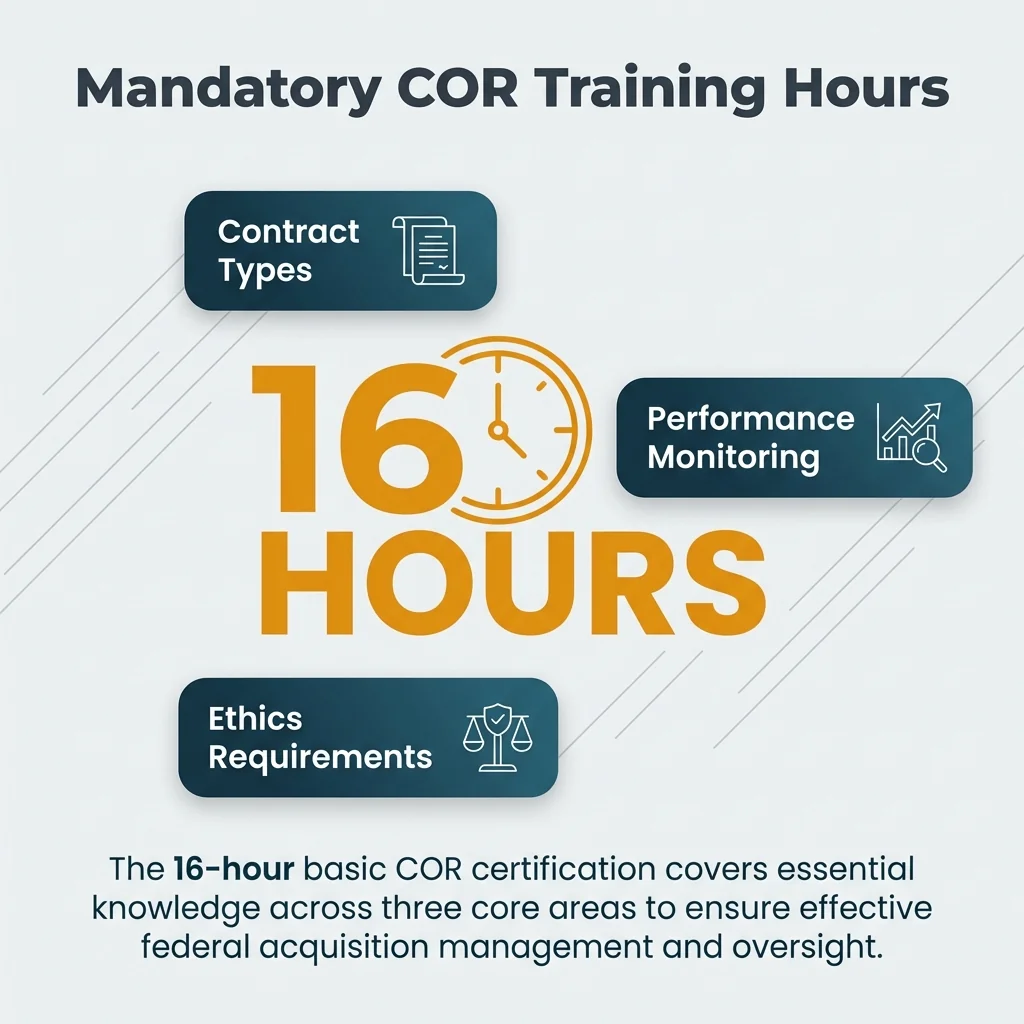
Federal acquisition regulations mandate training based on contract complexity and dollar value. Basic COR certification typically requires 16 hours of instruction covering contract types, performance monitoring, and ethics requirements.
Advanced contracts demand additional qualification. Technical expertise relevant to the contracted work is essential but insufficient without understanding contract administration principles.
The training requirement addresses a fundamental challenge. Subject matter experts often become CORs based on technical knowledge without understanding their role within the broader acquisition framework.
Core Oversight Responsibilities of a COR
The COR’s primary function centers on technical oversight. This means ensuring contractor deliverables meet specifications, performance occurs on schedule, and quality standards are maintained throughout the contract period.
Technical monitoring differs from administrative contract management. The COR evaluates whether the contractor is delivering what was purchased while the Contracting Officer handles payment processing, contract modifications, and legal compliance.
Technical Monitoring and Surveillance Activities
Technical monitoring follows the surveillance plan. This plan establishes what gets inspected, how frequently inspections occur, and what standards determine acceptable performance.
CoRGuard automates surveillance scheduling. The system generates inspection tasks based on contract requirements, tracks completion, and escalates overdue reviews to prevent gaps in oversight coverage.
Effective surveillance requires documentation. The COR must record observations, note deviations, and maintain evidence supporting acceptance or rejection decisions.
| Oversight Activity | Frequency | Documentation Required |
|---|---|---|
| Technical inspection | Per surveillance plan | Inspection reports with findings |
| Performance meetings | Monthly or as specified | Meeting minutes and action items |
| Deliverable review | Upon submission | Acceptance or rejection notice |
| Site visits | Risk-based schedule | Visit reports with observations |
Contract Requirements Verification
The COR verifies contractor compliance with all technical requirements. This includes specifications, quality standards, delivery schedules, and reporting obligations.
Verification requires understanding what the contract actually requires. Many performance issues stem from differing interpretations of ambiguous specifications rather than contractor non-performance.
When requirements appear unclear, the COR escalates to the Contracting Officer rather than unilaterally interpreting contract language. This protects both parties from disputes about what was actually required.
Technical Monitoring and Performance Evaluation
Performance evaluation translates technical observations into documented assessments. The COR must objectively measure contractor performance against established standards.
Subjective evaluation creates disputes. Clear performance standards, established at contract award, enable objective measurement throughout the performance period.
Inspection and Acceptance Procedures
Inspection determines whether deliverables meet specifications. Acceptance signifies government acknowledgment that the contractor fulfilled their obligation for that deliverable.
The COR should inspect before accepting. Once accepted, rejecting deliverables becomes significantly more complicated and may require Contracting Officer involvement.
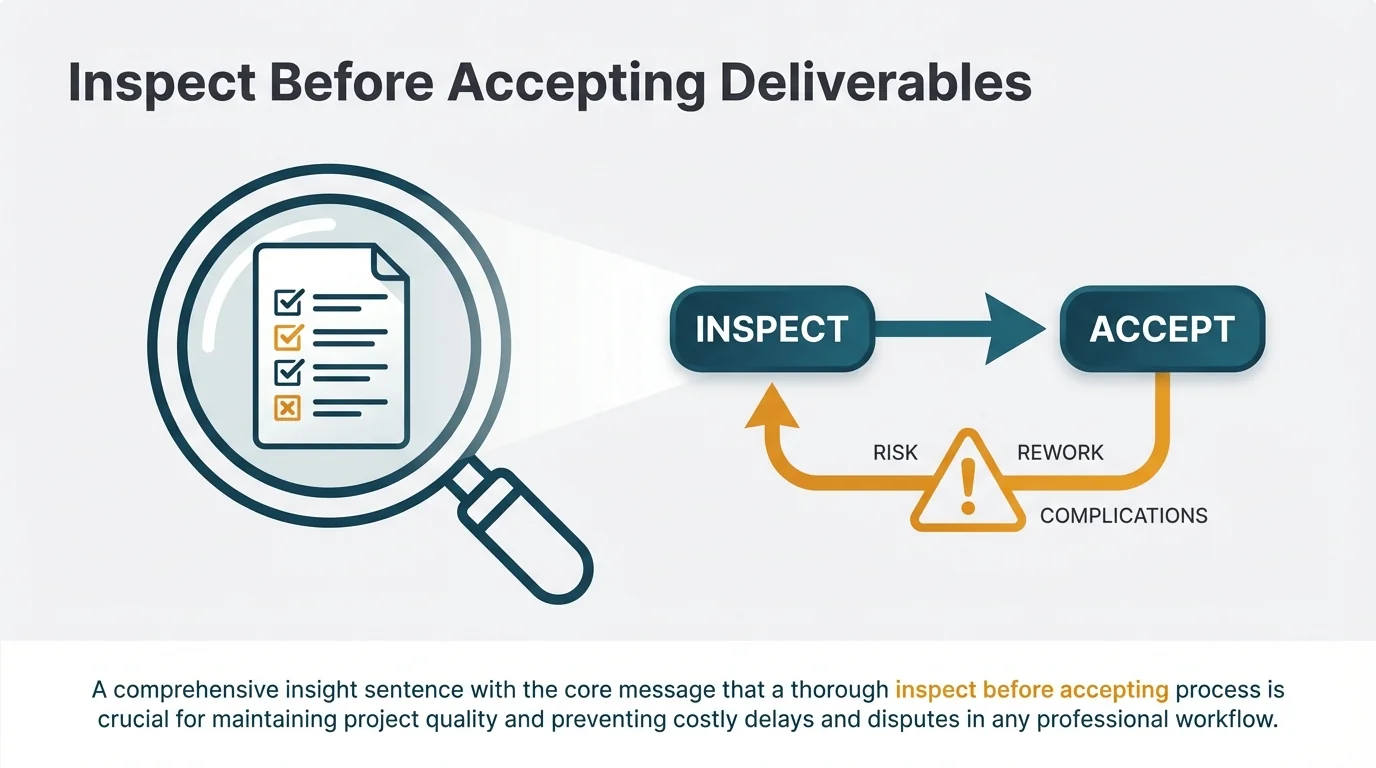
CoRGuard enforces inspection-before-acceptance workflows. The system prevents final acceptance until all inspection steps complete and any identified deficiencies are resolved or documented.
Contractor Performance Documentation
Documentation serves multiple purposes. It supports payment decisions, provides evidence for contract disputes, and informs future source selection decisions.
Performance documentation should be contemporaneous. Recording observations when they occur produces more accurate and defensible records than reconstructing events weeks later.
The platform timestamps all entries and prevents backdating. This creates an authentic record of what the COR knew when, supporting both quality oversight and legal defensibility.
| Documentation Type | Purpose | Retention Requirement |
|---|---|---|
| Inspection reports | Support acceptance decisions | Contract file duration |
| Performance issues | Evidence for corrective action | Contract file plus 3 years |
| Meeting notes | Record agreements and decisions | Contract file duration |
| Correspondence | Document communications | Contract file plus 3 years |
Inspection, Acceptance, and Quality Assurance
Quality assurance ensures contractors deliver what they promised. The COR implements the quality assurance surveillance plan through systematic inspection and verification activities.
Surveillance intensity should match contract risk. High-value or complex contracts warrant more frequent and detailed oversight than low-risk commodity purchases.
Building a Surveillance Plan
An effective surveillance plan identifies what matters most. Not every contract requirement deserves equal monitoring intensity.
The plan should specify inspection methods. Will you conduct random sampling, 100% inspection, or periodic reviews? The method should balance oversight effectiveness with resource constraints.
CoRGuard templates accelerate surveillance plan development. Users select contract type and risk level, then customize standard monitoring activities to match specific technical requirements.
Quality Standards and Compliance Verification
Quality standards translate contract requirements into measurable criteria. The COR needs objective standards for determining whether performance is acceptable.
Compliance verification confirms the contractor follows required processes. This differs from outcome inspection, which evaluates end products.
Process compliance matters for contracts where methodology affects results. Safety procedures, security protocols, and environmental controls often require verification that proper processes occurred, not just that outcomes appeared acceptable.
Communication and Stakeholder Management
The COR operates at the intersection of multiple stakeholders. Contractors need clear guidance, Contracting Officers need accurate performance information, and requiring activities need assurance their needs are being met.
Communication failures cause more contract problems than technical deficiencies. Ambiguous direction, delayed issue escalation, and incomplete documentation create disputes that could have been prevented.
Contractor Communication Protocols
All direction to contractors should be documented. Verbal instructions create ambiguity about what was actually required and when the contractor was informed.
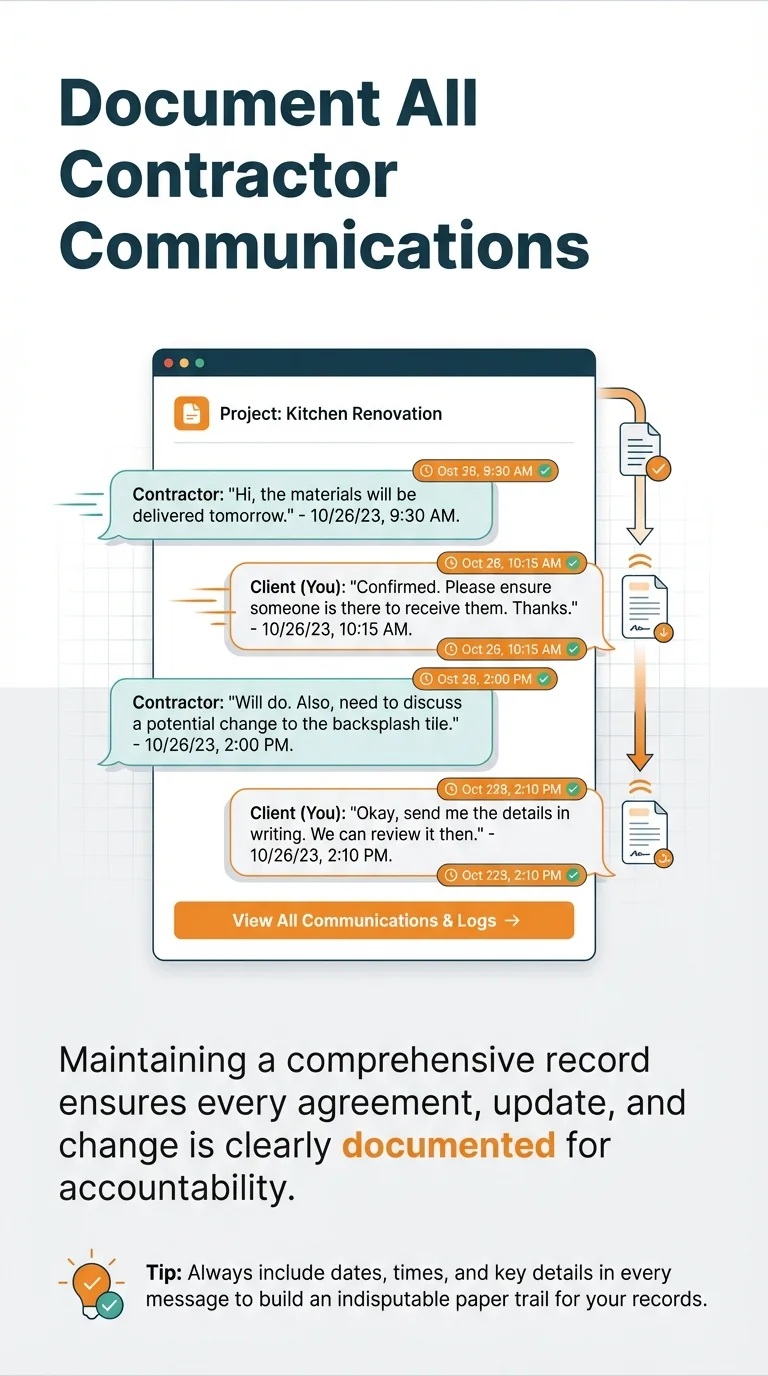
The COR should clarify their role when communicating with contractors. Making clear that technical guidance does not constitute contract modification prevents misunderstandings about authority.
CoRGuard channels all contractor communications through the platform. This creates a searchable record of what was communicated when, supporting both parties if questions arise about direction provided.
Reporting to the Contracting Officer
CORs must report significant issues promptly. Delayed notification limits the Contracting Officer’s ability to take corrective action before problems escalate.
Performance issues, potential delays, and quality concerns warrant immediate reporting. The Contracting Officer can then determine whether formal action is necessary.
The platform automates performance reporting. Monthly summaries compile inspection results, issues identified, and contractor responsiveness, giving Contracting Officers visibility without requiring manual report preparation.
Building an Effective Oversight Framework
Systematic oversight produces better results than reactive problem-chasing. The COR needs a framework that ensures nothing gets overlooked while remaining efficient enough to sustain throughout the contract period.
Technology supports oversight when it reduces administrative burden without compromising oversight quality. Automation should handle scheduling, documentation, and tracking while preserving the COR’s ability to exercise technical judgment.
Implementing CoRGuard for Contract Oversight
CoRGuard centralizes contractor oversight data. The platform maintains contractor credentials, tracks document expiration, schedules required audits, and monitors fatigue hours across your contractor base. Learn more at corguard.com.

Implementation begins with defining your compliance requirements. What documents must contractors maintain? What audits are required? Which safety alerts demand immediate notification?
The system then automates routine oversight tasks. Document expiration alerts prevent contractors from operating with outdated certifications. Audit scheduling ensures required reviews occur on time. Fatigue tracking flags potential safety risks before incidents occur.
Integration with Existing Contract Administration
CoRGuard complements rather than replaces contract administration processes. The platform handles systematic tracking while CORs focus on technical evaluation requiring subject matter expertise.
Integration with existing systems prevents duplicate data entry. Import contractor information from your procurement system, sync audit schedules with your calendar, and export performance data to contract files.
The goal is a seamless workflow. CORs should spend time evaluating contractor performance, not manually tracking compliance paperwork.
Challenges and Best Practices in COR Performance
CORs frequently face conflicting demands. Requiring activities want maximum oversight rigor, contractors want minimal administrative burden, and CORs themselves have limited time for oversight responsibilities that compete with their primary job duties.
The solution lies in focusing oversight intensity where it matters most. Risk-based surveillance allocates attention proportional to potential consequences.
Common Pitfalls and How to Avoid Them
Exceeding delegated authority creates problems. CORs sometimes approve changes they believe are minor without realizing those decisions required Contracting Officer authorization.
Inadequate documentation undermines otherwise effective oversight. Without records, the COR cannot demonstrate what inspections occurred or what the contractor was told.
Inconsistent oversight allows problems to grow. Contractors respond to what gets measured and enforced, not what’s written in the contract.
Leveraging Technology for Consistent Oversight
Technology cannot replace the COR’s technical judgment. But it can ensure oversight activities occur consistently regardless of the COR’s workload fluctuations.
Automated scheduling prevents oversight gaps. The system reminds you when inspections are due rather than relying on memory across multiple concurrent contracts.
Centralized documentation makes information accessible. When questions arise about previous inspections or contractor performance history, you need quick access to accurate records.
| Challenge | Traditional Approach | Technology-Enabled Solution |
|---|---|---|
| Tracking multiple contracts | Spreadsheets and calendars | Automated dashboard with all active oversight |
| Document expiration monitoring | Manual review of contractor files | Automated alerts before expiration |
| Audit scheduling | Calendar reminders | Risk-based scheduling with automatic updates |
| Performance documentation | Word documents in folders | Structured entries with search and reporting |
Maintaining Oversight Quality at Scale
As contractor portfolios grow, maintaining consistent oversight becomes challenging. The COR cannot dedicate equal attention to every contract.
Risk stratification focuses effort appropriately. High-value, complex, or safety-critical contracts receive more intensive oversight than routine service agreements.
CoRGuard supports risk-based allocation. Configure oversight intensity by contract category, then let the system adjust monitoring frequency, inspection depth, and reporting requirements accordingly.
The result is sustainable oversight. You maintain quality on your highest-risk contracts without drowning in administrative tasks for lower-risk agreements.
Effective contractor oversight balances regulatory compliance with practical execution. The COR role demands technical expertise, understanding of procurement principles, and systematic approach to performance monitoring. Technology platforms like CoRGuard automate routine oversight tasks while preserving the COR’s ability to exercise informed judgment on technical performance questions. Start by ensuring your designation letter clearly defines your authority, implement a surveillance plan matched to contract risk, and document all oversight activities contemporaneously.